Dryers
Dryer thermal fuse keeps blowing: find what is overheating it
A dryer thermal fuse that blows again and again is a symptom. Crawl-space vents in older houses, stuck thermostats, grounded elements and slipping blowers.
Dryers, gas and electric · Lynnwood
Most Lynnwood dryers run on electricity, gas models turn up wherever PSE has a line, and plenty of them exhale through ducts far longer than the manual allows. We fix the dryer and tell you plainly when the vent is the real trouble.
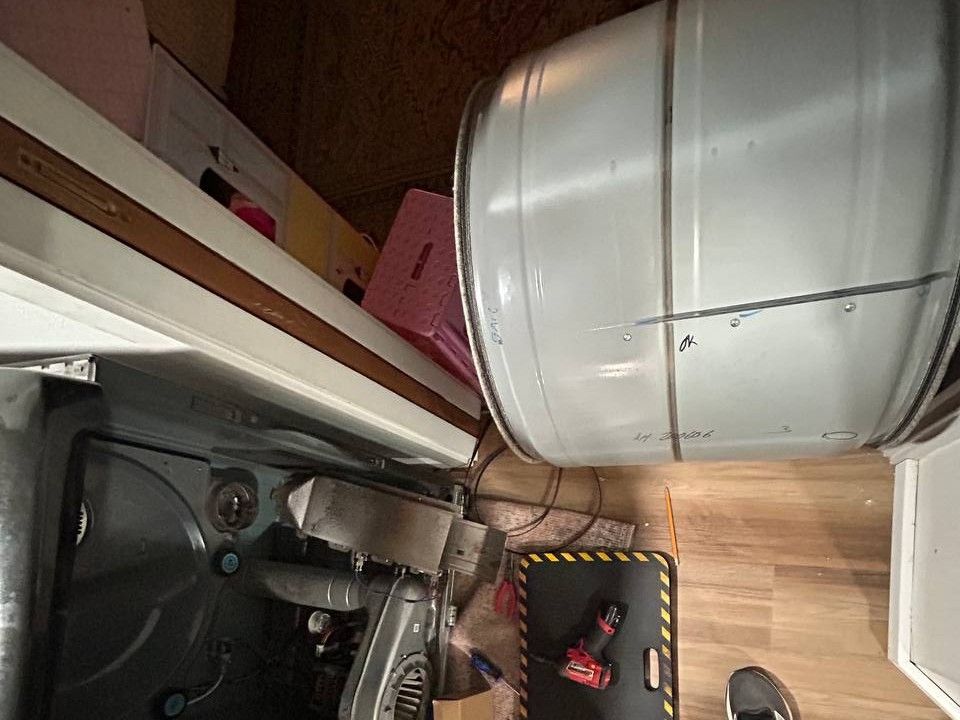
A clothes dryer is a heater, a blower and a turning drum, and in Lynnwood the blower side causes the most grief. In the mid-rise apartments around City Center and the condo buildings that went up after the mall opened in 1979, dryers sit in interior closets and push their exhaust through ducts that may wind through ceilings and chases, sometimes with a booster fan partway along. Lint settles in that run, airflow drops, and the dryer starts tripping its safety thermostat long before any part has actually worn out. Moisture sensors then misread the load, cycles stretch on, and owners assume the heater has failed.
Houses tell a different story. Homes built between 1960 and 1979, about 40 percent of Lynnwood's housing, often still feed the dryer from its original circuit through a three-slot receptacle. When a newer dryer arrives with a four-wire cord, or a terminal block overheats at a loose connection, the trouble shows up as no heat, a scorched smell or a breaker that trips. Part of every dryer call in those homes is working out which side of the plug the fault is on.
What you seeElectric dryer tumbles, but the air stays cool
Likely causeOpen thermal fuse, broken element coil or a tripped high-limit
What we doMeter each part, replace what failed, then check airflow so it does not happen again
What you seeGas igniter glows, burner never lights
Likely causeWeak gas valve coils or a failing flame sensor
What we doTest the coils and sensor, replace the faulty part and watch the flame through a cycle
What you seeLoads need two runs in the wetter months
Likely causeRestricted duct or moisture sensor bars coated with residue
What we doMeasure airflow at the outside hood, clean the sensor bars and inspect the duct
What you seeThumping or squealing as the drum turns
Likely causeFlat-spotted drum rollers, a worn idler pulley or tired glides
What we doReplace the worn rollers, pulley or glides, and the belt if it is frayed
What you seeNothing at all when you press start
Likely causeDoor switch, thermal fuse, or no power reaching the receptacle
What we doTest the receptacle and breaker first, then the switch, fuse and motor circuit
What you seeBurning smell from the back of the cabinet
Likely causeLint packed near the heater, or a scorched cord terminal
What we doStop using it; we clean, inspect the terminal block and replace damaged wiring inside the dryer
Lynnwood has one of the larger shares of big apartment buildings among the nearby suburbs: about 21 percent of homes sit in buildings of twenty units or more, and in North Lynnwood the figure is closer to 30 percent. Those buildings rarely vent a dryer straight out through an outside wall. When we arrive, we pull the dryer, look at the transition hose, check what is actually leaving the exterior or roof hood, and tell you whether cleaning the building's duct is something to raise with the property manager. Putting a new element into a dryer that cannot exhale only starts the countdown to the next failure.
Puget Sound convergence-zone showers mean Lynnwood laundry often starts out heavier and dries in damp air. That magnifies small airflow problems; a dryer that copes fine in July can need two cycles in November. The flap on the outside hood matters here too, since damp lint sticks to it and can hold it half shut for weeks before anyone looks. Garages add their own wrinkle: a dryer pulling in cold, wet air from a Meadowdale garage in January is simply doing more work than one in a heated closet. When drying times climb only in winter, we check the venting and the incoming air before blaming the heater.
In houses of that era, your technician puts a meter on the outlet and confirms the breaker before opening the cabinet. An electric dryer that tumbles but never warms may be getting only half of its 240 volts, which can come from a tripped leg on a double breaker or a worn receptacle. We measure that first. If the problem is in the home's wiring, we say so and leave the circuit to an electrician; the cord, the terminal block and everything inside the cabinet are ours to repair.
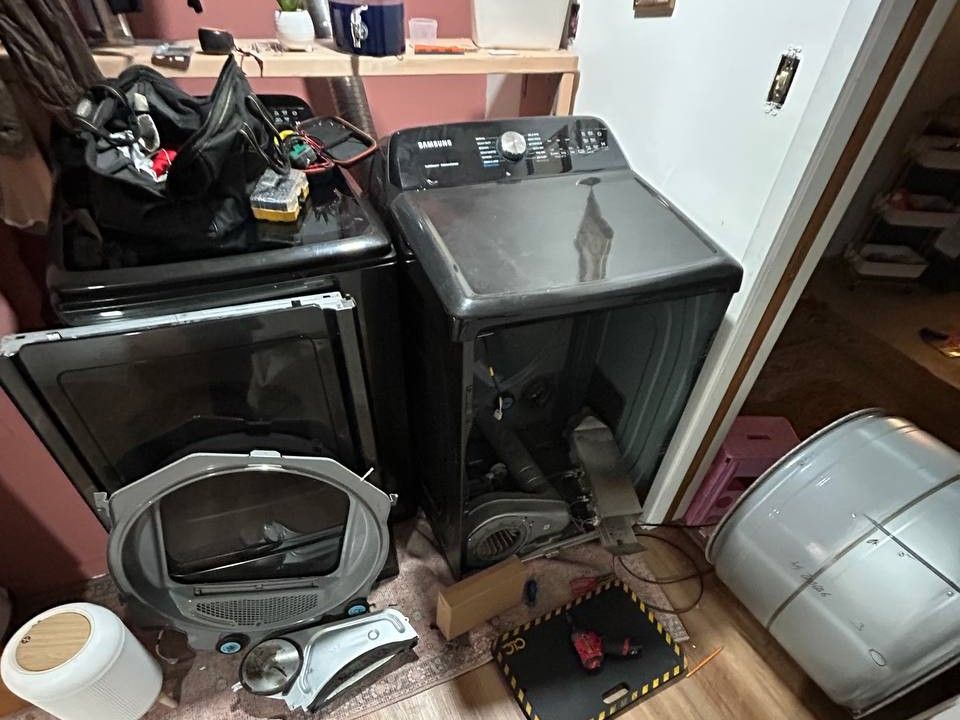
Dryer repair in Lynnwood starts at $229, a range that covers jobs such as a thermal fuse, a heating element, a gas igniter or a set of drum rollers. That opening figure is a guide, not your quote. Your technician writes the actual price for your dryer once the $95 diagnostic is done; decline the work and that diagnostic is all you pay. If the real fix is a cleaned building duct rather than a part, we tell you before suggesting anything else.
| Blocked vent cleared to the outside | from $229 |
|---|---|
| Thermal fuse or cycling thermostat | from $229 |
| Heating element (electric) | from $239 |
| Drum rollers, idler pulley, belt | from $239 |
| Igniter and gas valve coils | from $249 |
| Control board | from $259 |
| Diagnostic visit | $95, counted toward the repair |
| Another appliance on the same call | $10 off its diagnostic |
2026 starting prices for Lynnwood and nearby towns. The $95 diagnostic counts toward any repair you approve, and your technician writes the exact figure down before work begins.
Dryers are simple machines, and most of what breaks on them is inexpensive: fuses, elements, igniters, rollers, belts and switches. A basic electric dryer in an older Cedar Valley house can often be kept going for years with a part like that, provided the drum is not rusting and the motor turns without dragging. The case for replacing grows when an electronic model needs a control board on top of another major part, or when a stacked laundry center loses its washer half and the matching pair would have to be split. Gas dryers in Alderwood Manor or Lynndale houses deserve a second look before they are written off, since their igniters and valve coils are routine repairs. And if the duct is the real culprit, keep that in mind: a brand-new dryer connected to the same clogged run will struggle exactly like the old one. The estimate spells out both paths, and the call is yours.
Once a year is a sensible habit for a house with a short, straight run. Long runs in condos and apartments, ducts with several bends, and households that dry a lot of towels or pet bedding need it sooner. Signs that it is overdue include drying times creeping up, a hot laundry room and a weak puff of air at the outside hood while the dryer runs.
Clean the lint screen, then wash it with warm soapy water if dryer sheets have left a waxy film on it. Go outside while the dryer runs and make sure the hood flap opens and you can feel air. Check that the flexible hose behind the dryer is not crushed. If all three look fine and loads are still wet, book a visit.
Yes, gas and electric. On gas models we test the igniter, the valve coils, the flame sensor and the thermal fuses, and we watch the burner through a heating cycle. Should you smell gas near the dryer, do not try anything yourself: clear everyone out of the house and phone PSE or 911 once you are outdoors. Once the gas side is confirmed safe, we can make the repair.
Yes. The cord and terminal block belong to the dryer, so we fit the cord that matches your receptacle and set the ground strap correctly for it. What we do not do is change the receptacle or the circuit in the wall; that is work for an electrician. If the receptacle shows heat damage or does not test properly, we explain what we found so you can have it handled.
We clean the lint path inside the dryer and the connector hose behind it, and we measure the airflow at the exterior or roof hood. A shared duct that runs through the building is the association's or the owner's responsibility, so we write down what we found for you to pass along. That note usually settles the question of whether the dryer or the duct needs the attention.
Something not working?
Reach us at (425) 287-5458 or through the booking form; requests made in the morning stand the strongest chance of a same-day slot. Your $95 diagnostic is counted inside the repair price when you go ahead, and customers 65 and up, veterans and active-duty families save up to $18 on the repair.
Dryers
A dryer thermal fuse that blows again and again is a symptom. Crawl-space vents in older houses, stuck thermostats, grounded elements and slipping blowers.
Book a repair
Three quick steps. We call back to confirm a time; requests that come in during the morning can usually be seen the same day.
Rather call? (425) 287-5458 · Mon–Sat 8–7