Ice makers
Small or hollow ice cubes: following the water back to the wall
Small, thin or hollow ice cubes usually trace back to the water supply: saddle valves in older houses, wall valve boxes in new townhomes, filters and sensors.
Ice makers · fridge and freezer
When the bin stays empty, the cubes come out thin or the dispenser jams, the fault is usually a valve, a fill line or the ice maker module. We repair ice makers built into refrigerators and freezers in eleven towns around Lynnwood.
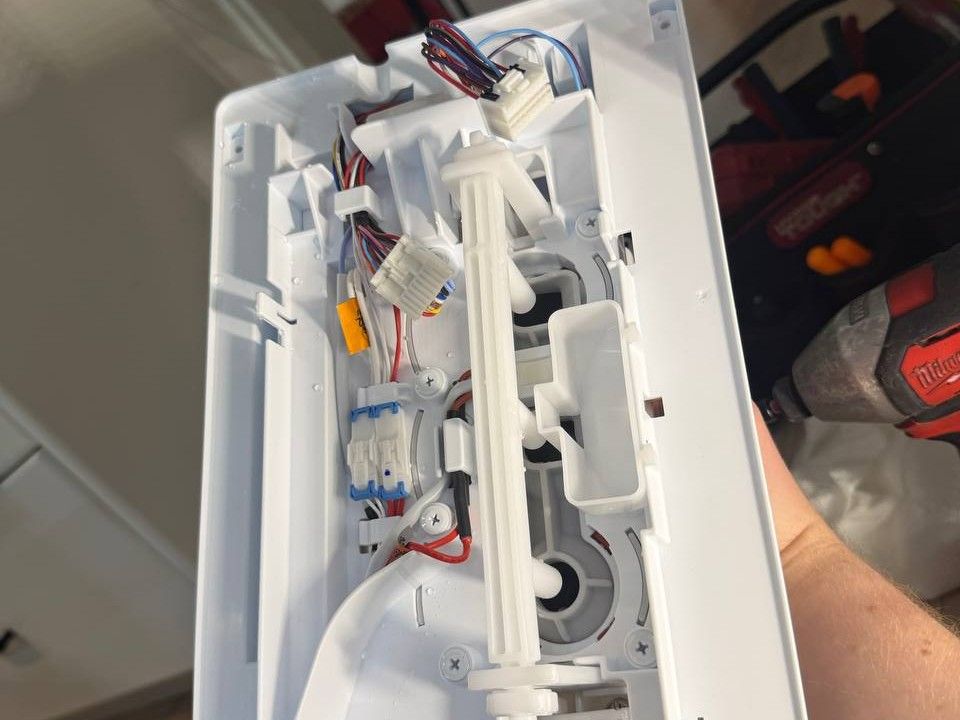
An ice maker is a small machine inside a big one, and it fails on its own schedule. The refrigerator can hold temperature perfectly while the ice maker sits idle because its inlet valve has worn, its fill tube has frozen, or the module's motor has stopped turning the ejector. Most of these are first-visit repairs, since valves, fill-line parts and the common modules ride with us. The area's water helps: Everett's supply and Seattle's Tolt water are both soft, so mineral scale, a common cause of clogged valves and crusted molds in harder-water regions, rarely plays a part here. That leaves cold, wear and supply problems as the usual suspects, and each one leaves a different clue in the bin, from thin crescents to a solid frozen block to nothing at all. In apartment kitchens across Lynnwood and south Everett, the ice maker is often the first feature tenants give up on; a valve or module swap usually brings it back, and we can hand the estimate to the landlord for approval.
Storms add their own pattern. After the November 2024 bomb cyclone, households across Snohomish PUD, Seattle City Light and PSE territory came back to bins of half-melted cubes refrozen into one block, augers straining against it and fill tubes iced solid. Refrigerators and second freezers standing in the attached garages of the area's 1980s-and-later subdivisions, a big share of the housing in Mill Creek and Mukilteo, run into the same trouble in a cold snap, when the supply line and fill tube sit in freezing air. The June 2021 heat dome showed the opposite strain. With Sea-Tac at 108°F, freezers in hot garages fought to stay cold enough to set each batch, and ice production slowed to a crawl well before the food showed any sign of trouble. Built-in refrigerators in Edmonds and Woodway kitchens often carry an ice maker module of their own design, and those get the same patient diagnosis as a basic top-freezer kit.
What you seeBin empty, nothing happening
Likely causeIce maker switched off, bail arm up, freezer above its setpoint, or the valve not opening
What we doCheck settings and freezer temperature, force a harvest, test the valve
What you seeThin, small or hollow cubes
Likely causeLow flow from a clogged filter, kinked line or weak valve
What we doMeasure the fill, check the line and filter for restrictions, and replace the valve if it delivers too little
What you seeIce backed up in a solid lump
Likely causeThaw and refreeze after an outage, or a door left open
What we doClear the bin, check the seals and defrost system, run a test harvest
What you seeFill tube iced over
Likely causeFreezer too cold near the tube, a dripping valve, or a failed tube heater
What we doThaw the tube, fix the drip or the heater, and set the freezer to a temperature that won't refreeze it
What you seePuddle forming behind the refrigerator
Likely causeSplit supply line, loose fitting or cracked inlet valve
What we doReplace the line or valve, retighten fittings, check again for drips
What you seeDispenser grinds or won't push ice
Likely causeJammed auger, failed auger motor or dispenser switch
What we doUnjam the auger and clear the chute, test the motor and dispenser switch, replace the failed part
Your technician starts by watching a full cycle: whether the valve opens, how much water lands in the mold, how long the freeze takes, and whether the ejector pushes the cubes out. Many ice makers have a test mode that forces a harvest, which speeds this up. Valve coils get a resistance check, the supply gets a flow check at the back of the fridge, and the fill tube is inspected where it enters the freezer, the coldest and most trouble-prone point. Inlet valves, supply-line parts and the common modules are in the vehicle, so most repairs are finished in one visit. In-door ice compartments on French-door models get extra attention to the seals, the fan and the small heaters that keep them from icing up. If the water dispenser has been running slowly too, mention it when you book; a shared valve or filter often explains both, and it changes which parts we bring. Before we leave, the new part completes a harvest while we watch, so you know the bin will fill.
We repair ice makers in Whirlpool, KitchenAid, Maytag, GE, Café, Frigidaire, Electrolux, LG, Bosch, Sub-Zero, Thermador, Fisher & Paykel and Kenmore-label refrigerators and freezers. We don't repair countertop ice makers, which count as small countertop appliances, or commercial ice machines, which fall under commercial refrigeration, and sealed-system work such as compressor replacement or refrigerant recharging is outside what we do. If an ice maker problem turns out to be a freezer that can't get cold because of the sealed system, we tell you right away and help you weigh whether the refrigerator is worth keeping. The house's water supply and the shutoff under the sink belong to the home, but we point out a seeping valve or a kinked line whenever we see one. Ice makers in freezer-only units, including upright freezers in garages, use the same kinds of valves and modules, and we test them the same way.
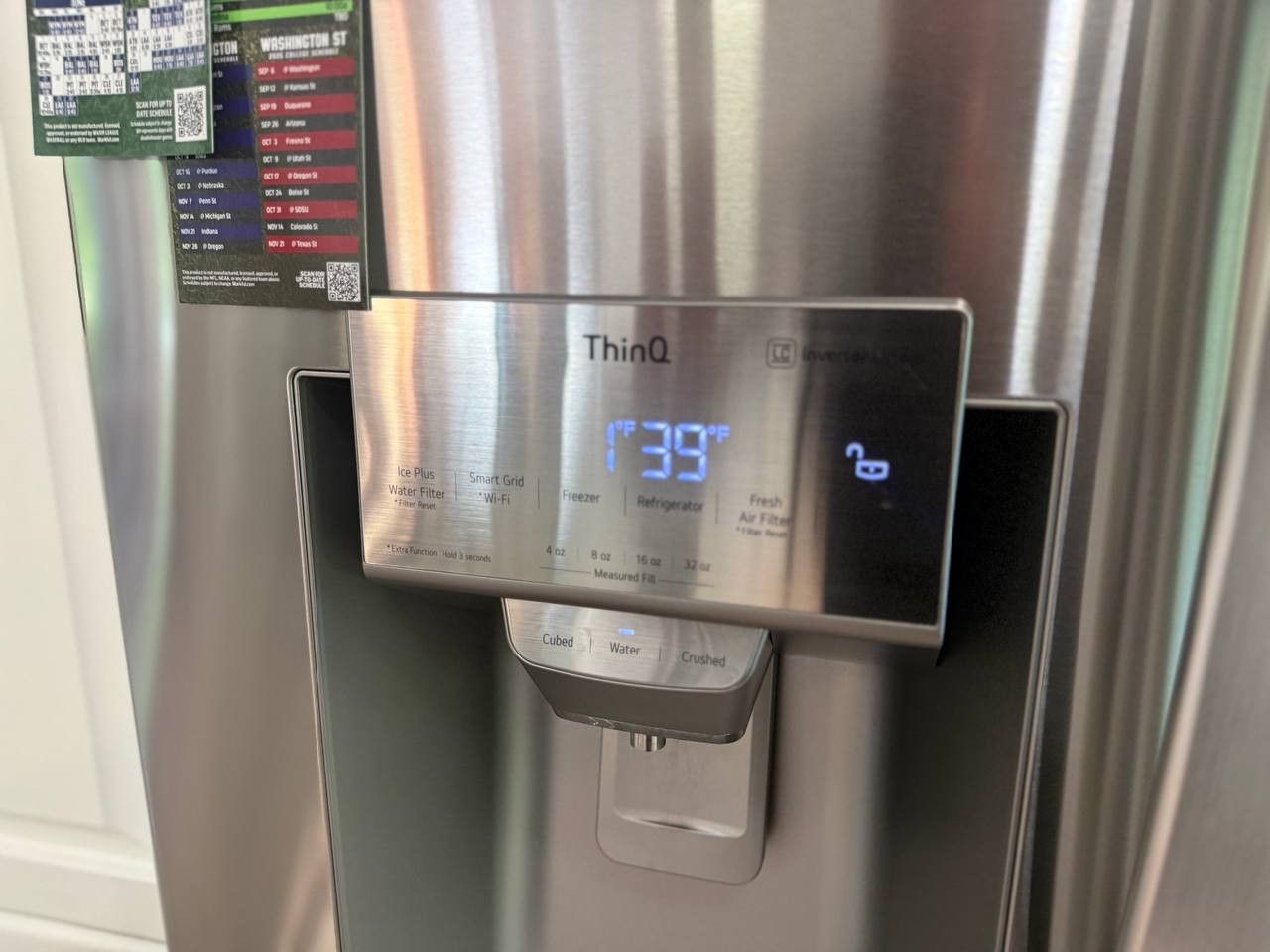
Ice maker repairs start at $289, and the table below covers fill lines, inlet valves and complete modules. That figure is where the category begins, not a quote; your price is on the written estimate after the $95 diagnostic, and the work waits for your approval. Approving it credits the diagnostic toward the repair. Seniors 65+, veterans and active-duty military households take up to $18 off, and a second appliance looked at on the same visit gets $10 off its diagnostic.
| Frozen fill tube thawed and protected | from $289 |
|---|---|
| Ice maker inlet valve | from $289 |
| Ice maker assembly | from $295 |
| Diagnostic visit | $95, counted toward the repair |
| Another appliance on the same call | $10 off its diagnostic |
2026 starting prices for Lynnwood and nearby towns. The $95 diagnostic counts toward any repair you approve, and your technician writes the exact figure down before work begins.
Ice makers
Small, thin or hollow ice cubes usually trace back to the water supply: saddle valves in older houses, wall valve boxes in new townhomes, filters and sensors.
Longer than most people expect. The freezer has to settle at its normal temperature before the ice maker will fill, and the first batches are often small or uneven while air clears out of the line. Throw those first batches away. If the bin is still empty after a full day, check that the ice maker is switched on and the supply valve is open, then call us.
Keep the doors closed so the freezer stays cold as long as possible. Once power returns, empty the bin if the cubes have melted and refrozen, since a solid block can jam the auger or the ejector. Give the freezer time to recover before expecting new ice, and if the ice maker still won't cycle after that, book a visit.
Yes, as long as it's a household refrigerator or freezer. Ice makers in cold garages run into trouble when the fill tube freezes or the freezer cycles less through the winter. We check whether the unit suits a garage, look at the fill tube and any heater on it, and inspect the supply line, which is often longer and more exposed in a garage.
Ice absorbs odors from the freezer, so old cubes and uncovered food are the usual reasons. An overdue water filter comes next. Replace the filter, empty and wash the bin, and discard the first batches of new ice. If a new plastic supply line went in recently, a mild taste can linger for a while. Persistent off flavors are worth a look at the line and the valve.
If the refrigerator itself keeps food cold, usually yes; a valve, fill line or module is a modest repair next to a new fridge. On a much older unit, we look over the whole refrigerator during the diagnostic and tell you whether other problems are close behind. Some owners choose to switch the ice maker off and use trays, and that is a perfectly sound option too.
Something not working?
No ice? Call (425) 287-5458 or book online, Monday through Saturday, for ice maker repair across the Lynnwood area. Approve the repair and your $95 diagnostic is credited to it; households with a senior 65+, a veteran or an active-duty service member also get up to $18 off.
Book a repair
Three quick steps. We call back to confirm a time; requests that come in during the morning can usually be seen the same day.
Rather call? (425) 287-5458 · Mon–Sat 8–7