Ice makers
Small or hollow ice cubes: following the water back to the wall
Small, thin or hollow ice cubes usually trace back to the water supply: saddle valves in older houses, wall valve boxes in new townhomes, filters and sensors.
Ice makers · Edmonds, Woodway
Refrigerator and freezer ice makers are our work in Edmonds, from French-door units in Perrinville kitchens to built-in columns in Woodway. Because the water here is so soft, scale is rarely the cause; valves, filters and supply lines usually are.
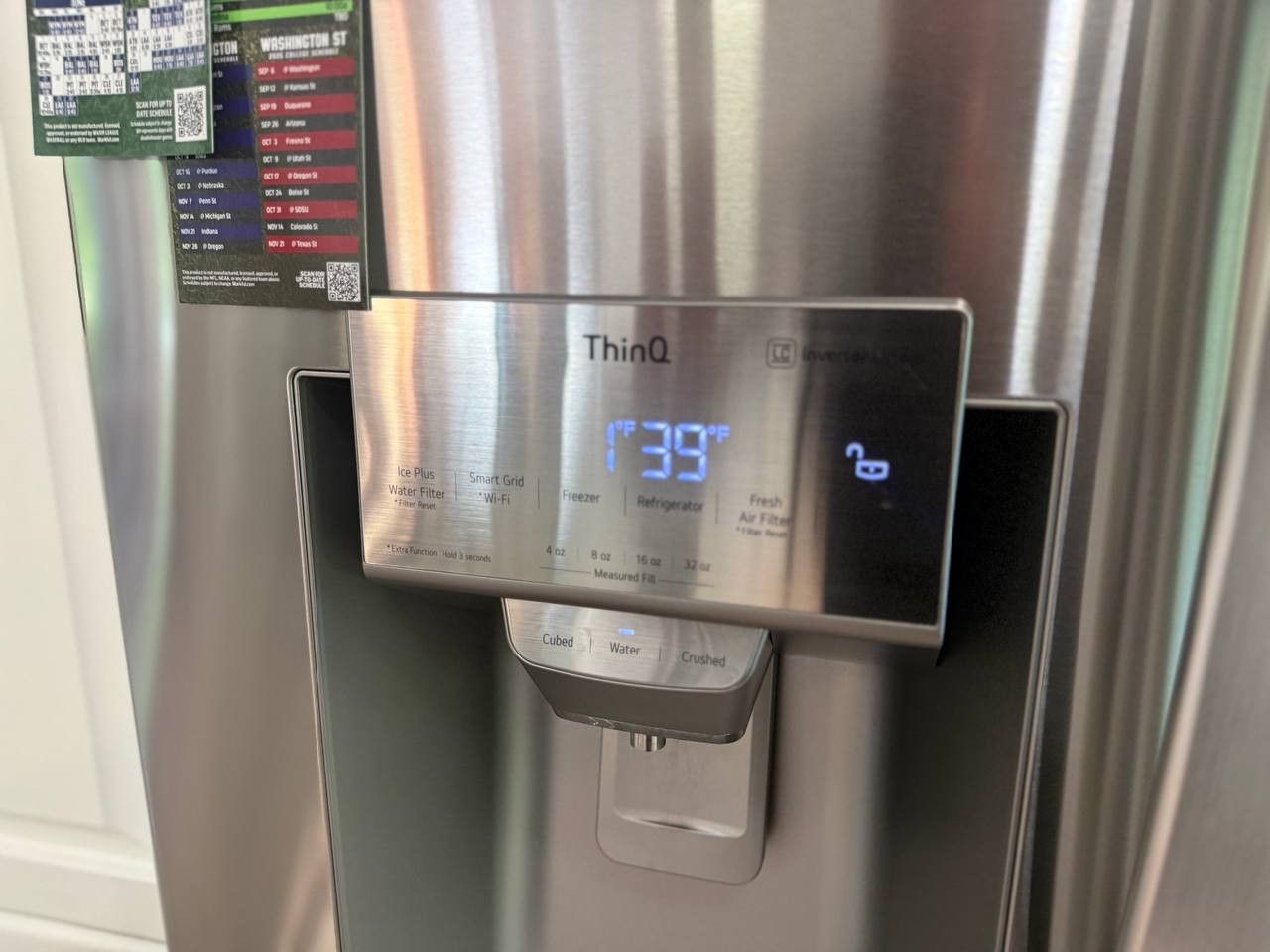
An ice maker depends on a short chain: pressure at the supply valve, a clean filter, an inlet valve that opens on command, a fill tube that stays clear, a freezer cold enough to freeze the mold, and a module that ejects the cubes and stops when the bin is full. When any link fails, the result looks the same from the kitchen: no ice, or too little. Diagnosis in Edmonds means walking that chain in order, and in a city with this much 1960s plumbing, the start of the chain deserves real attention. In-door ice makers on French-door models add one more link, since that compartment depends on cold air ducted up from the freezer.
We repair ice makers built into refrigerators and freezers, including French-door models with the ice maker in the door, side-by-sides, bottom-freezers and built-in columns from Sub-Zero, Thermador and Monogram. Separate undercounter ice machines, the kind found at wet bars in some view homes, are outside what we take on, as is commercial ice equipment, and we say so when you call rather than after a trip. Most ice maker repairs are finished on the first visit, since inlet valves and the common modules ride in the vehicle.
What you seeNo ice at all, freezer cold
Likely causeInlet valve not opening, or no water reaching it
What we doTest the valve coil and pressure, replace the valve if it failed
What you seeSmall, hollow or crescent-thin cubes
Likely causeLow pressure from a clogged filter or a restricted line
What we doCheck pressure at the valve, replace the filter, inspect the line
What you seeIce maker fills but never dumps
Likely causeModule motor or thermostat failed, or freezer too warm
What we doCheck freezer temperature, then test and replace the module
What you seeDispenser clicks but no ice comes out
Likely causeCubes fused in the bucket or a seized auger motor
What we doThaw and clear the bucket, test the auger and door flap
What you seeWater dripping from the dispenser chute
Likely causeInlet valve seeping when it should be closed
What we doReplace the inlet valve and check the fill tube for ice
What you seeIce smells or tastes stale
Likely causeOld filter, long-stored ice or odors in the freezer
What we doReplace the filter, empty the bin, check door seals and drain
Many Edmonds houses date from the 1960s, and their kitchens often feed the refrigerator through a self-piercing saddle valve clamped onto an old copper pipe under the sink, with thin plastic tubing snaking through the cabinets to the fridge. Saddle valves partly clog over time, and the tubing kinks when the refrigerator is pushed back after cleaning. The result is low pressure at the ice maker’s inlet valve, which produces small, hollow cubes and sometimes a fill tube that freezes. We check pressure before blaming the ice maker and tell you when the fix belongs to the supply line.
The soft water helps here. With hardness around 12.5 parts per million on the Everett supply, inlet valves and ice molds in Edmonds rarely scale up the way they do in hard-water regions, so we look past mineral buildup and toward filters, pressure and electrical faults. A filter left in place for two or three years can restrict flow as badly as scale would, though, and it is the first thing we check. Where a line was replaced during a remodel, it is usually braided stainless with a proper quarter-turn valve, and those rarely cause trouble.
In the larger view homes and in Woodway, built-in refrigerators often have their own ice makers behind a drawer or panel, and some are fed by long supply runs from a sink across the room, sometimes through a separate filter mounted in a cabinet. Those runs can lose pressure, especially when that remote filter is overdue. Built-in ice makers often sit in their own compartment with a dedicated fan, and when that fan stalls, the mold fills but freezes slowly. Before the visit, find where the refrigerator’s water shutoff is; it saves time on the day.
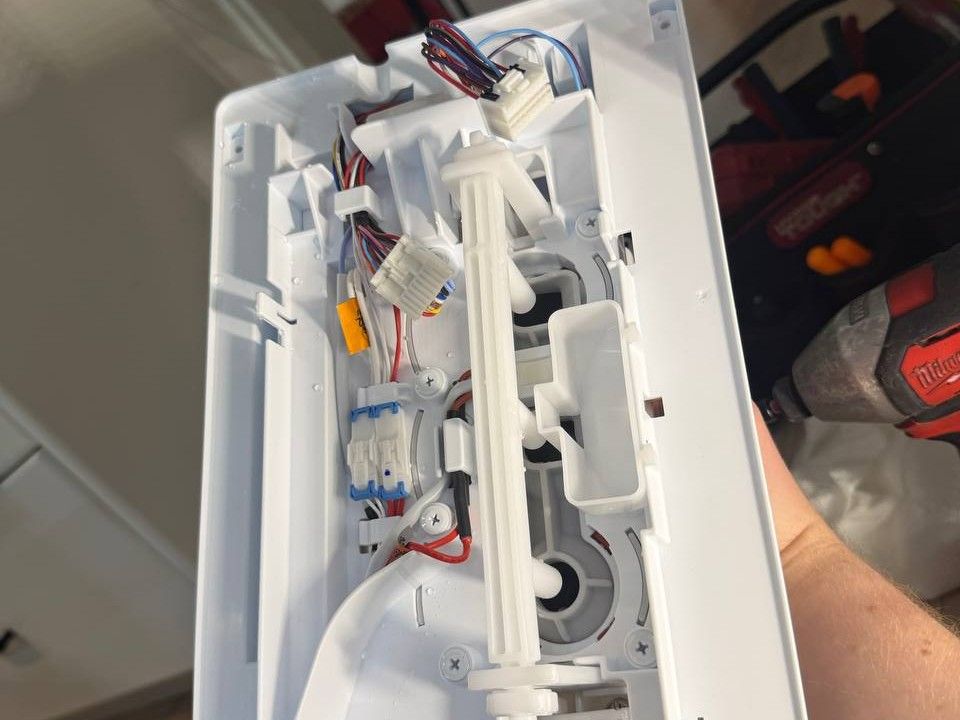
Ice maker repair begins at $289, and assembly replacements sit above valve work. Treat that number as the floor of the category rather than an estimate for your refrigerator. Your technician prices the actual repair in writing once the $95 diagnostic is finished, and the diagnostic is credited when you approve the work. Seniors 65+, veterans and active-duty military households get up to $18 off the approved repair when the box is ticked at booking. If the refrigerator itself is cooling poorly, that comes up in the same diagnosis, since the ice maker depends on it.
| Frozen fill tube thawed and protected | from $289 |
|---|---|
| Ice maker inlet valve | from $289 |
| Ice maker assembly | from $295 |
| Diagnostic visit | $95, counted toward the repair |
| Another appliance on the same call | $10 off its diagnostic |
2026 starting prices for Lynnwood and nearby towns. The $95 diagnostic counts toward any repair you approve, and your technician writes the exact figure down before work begins.
Most ice maker faults are worth fixing. Inlet valves and modules are moderate repairs, and on a refrigerator that otherwise cools well, there is little reason to give up ice. The harder question comes with in-door ice makers on some French-door models, where frost that keeps building in the ice compartment points to a design that may fail again; we tell you if a model has that history and what a repair can and cannot prevent. If the refrigerator is old enough that its sealed system is near the end, spending on the ice maker makes less sense, and since sealed-system work is not something we do, we will be candid about that. For built-in columns in Edmonds view homes, repair nearly always beats replacement because of the cabinetry involved. On in-door models, ask us to check the gasket around the ice compartment while we are there; a gap is a common cause of frost and slow ice.
Most manufacturers say every six months, and in Edmonds that is a good schedule even though the water is soft. The filter traps sediment and chlorine taste rather than hardness, and it slowly restricts flow either way. A filter overdue by a year or more is one of the most frequent reasons for small cubes. Use the part number listed in your manual; poorly fitting filters can leak at the housing.
Usually, at least for a good while. Frost in a door-mounted ice compartment comes from warm, moist air getting in, through a worn gasket around the compartment, a door out of alignment or a fan or damper that is not moving cold air as designed. We find which, replace the seal or part, and clear the ice. Some models are prone to it, and we will tell you if yours is one.
Two common reasons. If someone turned off the water or the shutoff arm got lifted, it simply paused. If the power went out while you were away, ice in the bucket may have melted and refrozen into a solid block that jams the auger. Check the arm or switch first, then empty the bucket. If it still makes nothing within a day, book a visit.
Yes. We test the ice maker and the connection behind the fridge on the same visit. A kinked or crushed supply line, a closed valve, or a saddle valve that was never fully opened are installation slips that we can usually correct. If a brand-new ice maker fails our tests, that is normally a matter for the manufacturer’s warranty, and we will tell you so rather than charge you for a part.
Often. A fill tube that froze sends the next fill of water over the mold and onto the freezer floor, where it turns to ice. A leaking inlet valve does the same more slowly. A clogged defrost drain can also cause it, and that is a refrigerator repair rather than an ice maker one. Mention when you book whether the ice sits under the ice maker or at the back of the freezer.
Something not working?
Call (425) 287-5458 or book online and say whether the ice maker is in the door or the freezer. The $95 diagnostic is credited to an approved repair; for seniors 65+, veterans and active-duty military households, we take up to $18 off the repair.
Ice makers
Small, thin or hollow ice cubes usually trace back to the water supply: saddle valves in older houses, wall valve boxes in new townhomes, filters and sensors.
Book a repair
Three quick steps. We call back to confirm a time; requests that come in during the morning can usually be seen the same day.
Rather call? (425) 287-5458 · Mon–Sat 8–7