Ice makers
Small or hollow ice cubes: following the water back to the wall
Small, thin or hollow ice cubes usually trace back to the water supply: saddle valves in older houses, wall valve boxes in new townhomes, filters and sensors.
Lake Forest Park · Ice makers
Lake Forest Park ice makers stall for two main reasons: water lines added during remodels of older houses, and power outages under the trees. We repair built-in ice makers in refrigerators and freezers and the lines that feed them.
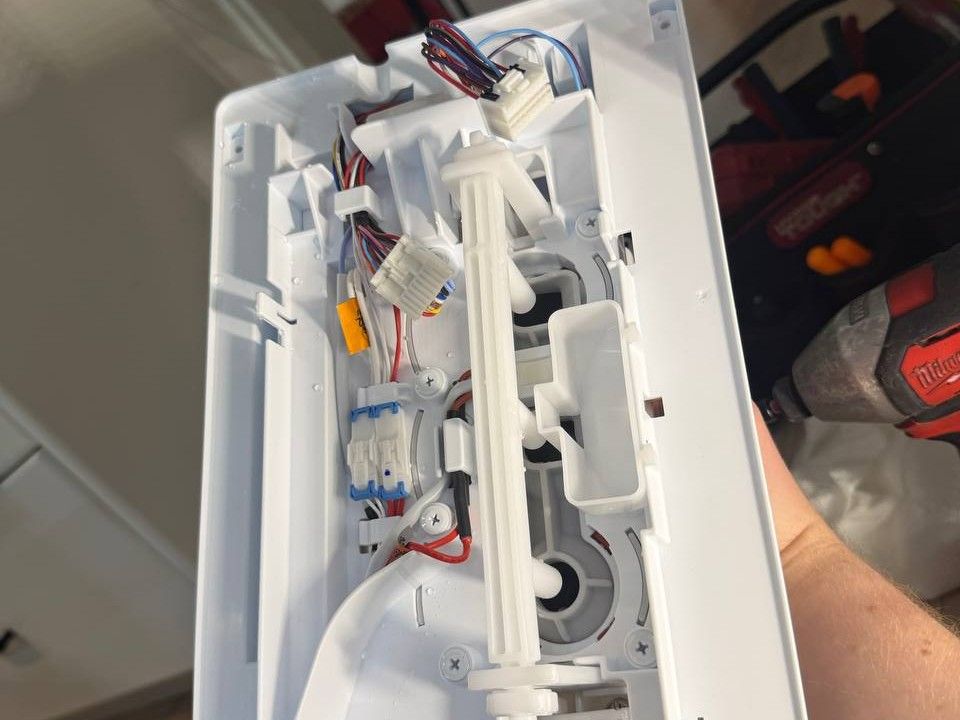
Almost no Lake Forest Park house was built with a water line to the refrigerator. With only about 9 percent of homes built since 2000, the line feeding today's ice maker was usually added later, during a kitchen remodel or on the day a new fridge arrived. Whoever installed it ran a quarter-inch line from wherever water was handy: under the sink and through the cabinets, up through the floor from a crawl space, or across a basement ceiling. Each route has its weak points, from a kinked plastic tube behind the fridge to a compression fitting that has crept loose over the years.
We repair ice makers built into refrigerators and freezers, from the single tray in a top-freezer to the door-dispensing systems in French-door and side-by-side models. The work covers the ice maker module, the inlet valve, the fill tube and its heater, the bin auger and dispenser motor, and the freezer conditions the ice maker depends on. If the real problem is a freezer that will not hold temperature because of a sealed-system failure, we say so right away; that repair is not one we take on.
What you seeIce production fell off gradually over months
Likely causeClogged filter or debris on the inlet valve screen
What we doReplace the filter, inspect the valve screen and replace the valve if it is fouled
What you seeIce maker cycles but the tray stays dry
Likely causeFill tube iced where it enters the freezer, or a weak inlet valve
What we doThaw the tube, test the tube heater and check the valve's flow
What you seeIce fused into one lump that jams the dispenser
Likely causePartial thaw and refreeze during an outage
What we doClear the bin and auger, test the dispenser motor and reset the ice maker
What you seeWater pooling behind or under the fridge
Likely causeLoose compression fitting or a cracked supply line at the back
What we doRebuild the connection, replace the line behind the fridge and check the floor
What you seeClicks and hums but never dumps ice
Likely causeModule motor or mold heater has failed
What we doRun a forced test cycle and replace the module
What you seeFreezer warm and the ice soft or wet
Likely causeEvaporator fan or defrost fault in the freezer
What we doRepair the freezer first, then confirm the ice maker cycles
Where the line runs matters most in cold weather. Many Lake Forest Park houses sit over crawl spaces or have kitchens above unheated basements and garages, and a convergence-zone cold snap can chill a supply line passing through them. Even short of freezing, cold water and a slow line can leave the tray underfilled. Inside the refrigerator, the fill tube that enters the freezer has its own small heater; if that heater fails, the tube ices over and the ice maker cycles on an empty tray. We test the heater and the valve, and if the trouble is a section of line under the house, we show you where it is and what it needs.
The town's water picture is unusual. Three of its four providers, the Northshore and North City districts and Seattle Public Utilities, deliver soft Tolt River water, and on that supply scale rarely bothers an ice maker. Homes served by the Lake Forest Park Water District drink groundwater, and its hardness has not been published in any source we could check, so we look rather than assume: crust on the inlet valve screen or white deposits in the fill cup tell us minerals are involved, and a clean screen sends us looking elsewhere. Either way, the refrigerator's filter is the easy first step, and changing it is a safe check you can do yourself.
Storm outages finish the list. When a long outage warms the freezer, cubes in the bin soften, then freeze back together into a solid block once power returns, and that block can jam the auger and stall the dispenser motor. After an outage longer than a few hours, empty the bin, let the ice maker refill on its own and throw out the first batch. If the dispenser grinds or the ice maker never restarts, book a visit; we clear the jammed auger, test the motor and module, and check that the freezer is holding temperature again.
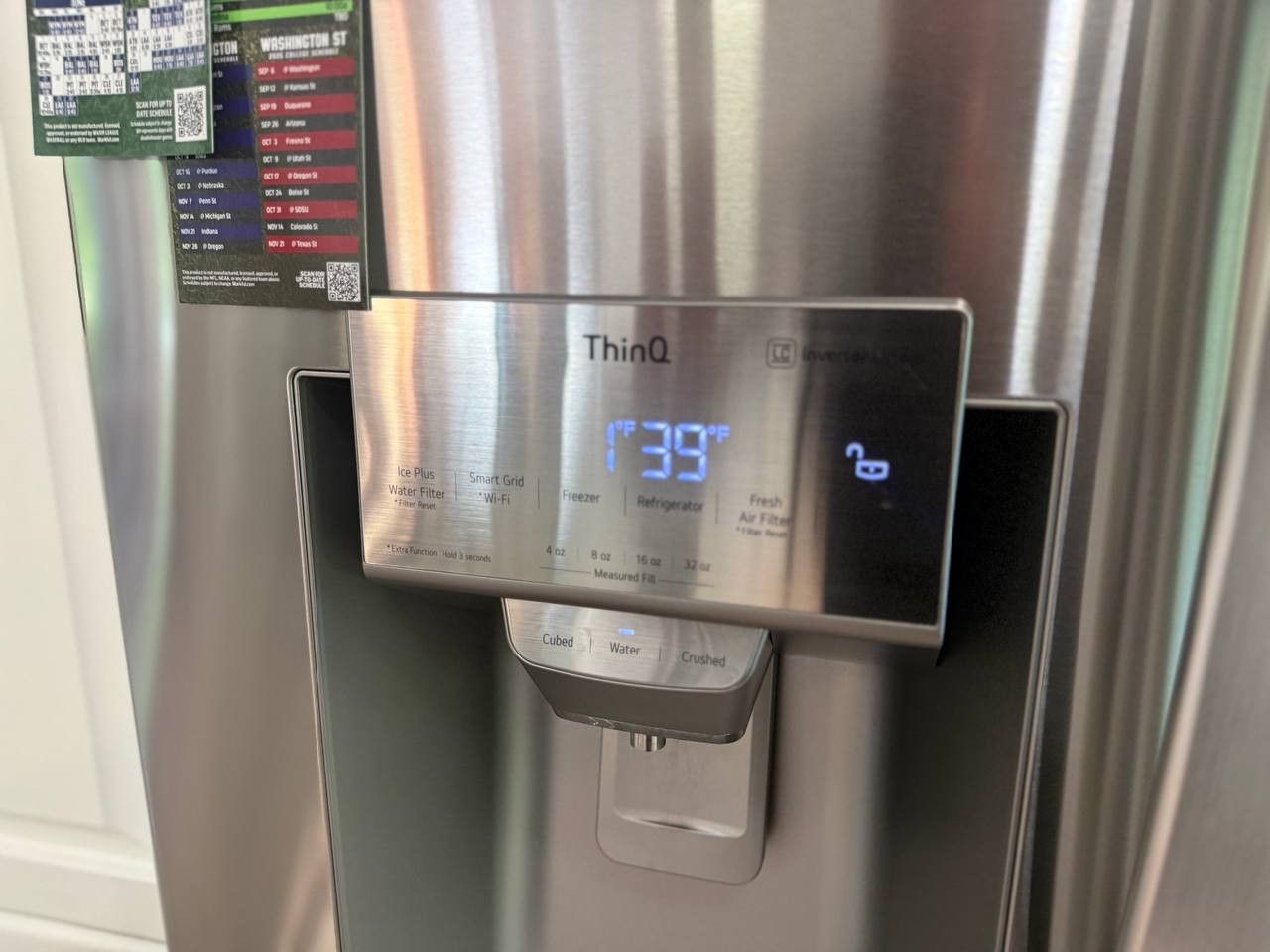
Ice maker repairs start at $289, and the table nearby lists water line, valve and module work. The starting figure is there for orientation only; your actual price is written into an estimate after the $95 diagnostic, nothing is replaced until you agree, and the diagnostic is credited toward the repair you approve.
| Frozen fill tube thawed and protected | from $289 |
|---|---|
| Ice maker inlet valve | from $289 |
| Ice maker assembly | from $295 |
| Diagnostic visit | $95, counted toward the repair |
| Another appliance on the same call | $10 off its diagnostic |
2026 starting prices for Lynnwood and nearby towns. The $95 diagnostic counts toward any repair you approve, and your technician writes the exact figure down before work begins.
If the refrigerator is sound, almost always. A module, an inlet valve or a fill-tube heater restores ice in one visit on most models, and the repair costs a small fraction of a new fridge. The calculation changes when the ice maker is a symptom of a bigger refrigerator problem: a freezer that cannot hold temperature because of a failed compressor or a refrigerant leak needs sealed-system work we do not perform, and on an older unit that usually means replacing the whole refrigerator. In Lake Forest Park we also look hard at the line. If the supply was run through a cold crawl space or kinked behind a built-in, fixing it properly once costs less than replacing ice maker parts that were never the cause. You get the price on paper, and the decision stays with you.
If you will be gone more than a few days, yes. Switch the ice maker off and close the valve that feeds the refrigerator, if you can reach it. That keeps a seeping valve from overfilling the tray while nobody is home, and it means a burst line can't run unnoticed. When you return, open the valve and let the first batch go.
Usually the auger is trying to push ice that has fused into a block, often after an outage or when the freezer door was left ajar. Stop using the dispenser, empty the bin and break up the ice. If it still grinds with a clear bin, the auger motor or its coupling may be failing, which we can test and replace.
We repair everything from the refrigerator's inlet inward, and we replace the flexible line behind the refrigerator. A valve on the house pipe, a line inside a wall or under the floor, or a leak in the house plumbing is a plumber's work. We show you exactly where the fault is so the right person fixes it.
Yes. Ice makers in garage units fail the same ways as kitchen ones, with one more risk: in a cold garage, the supply line and the fill tube are more likely to freeze. We repair the ice maker and tell you whether the line's route through the garage needs protecting. In winter, turning a garage ice maker off is often the simplest answer.
Often the same day, Monday through Saturday, especially if you call in the morning. The drive from central Lynnwood is about 14 to 18 minutes off-peak, and there is no distance charge. Read us the refrigerator's model number when you book so your technician can bring the likely part.
Something not working?
Book online or call (425) 287-5458 for ice maker repair in Lake Forest Park. Once you approve the repair, the $95 diagnostic is credited to it, and seniors 65 and older, veterans and active-duty military households can take up to $18 off the work.
Ice makers
Small, thin or hollow ice cubes usually trace back to the water supply: saddle valves in older houses, wall valve boxes in new townhomes, filters and sensors.
Book a repair
Three quick steps. We call back to confirm a time; requests that come in during the morning can usually be seen the same day.
Rather call? (425) 287-5458 · Mon–Sat 8–7