Ice makers
Small or hollow ice cubes: following the water back to the wall
Small, thin or hollow ice cubes usually trace back to the water supply: saddle valves in older houses, wall valve boxes in new townhomes, filters and sensors.
Shoreline · Ice makers
When a Shoreline ice maker slows down, the water reaching it is a more common culprit than the ice maker itself. We trace the supply from the shutoff to the mold and repair the part that actually failed.
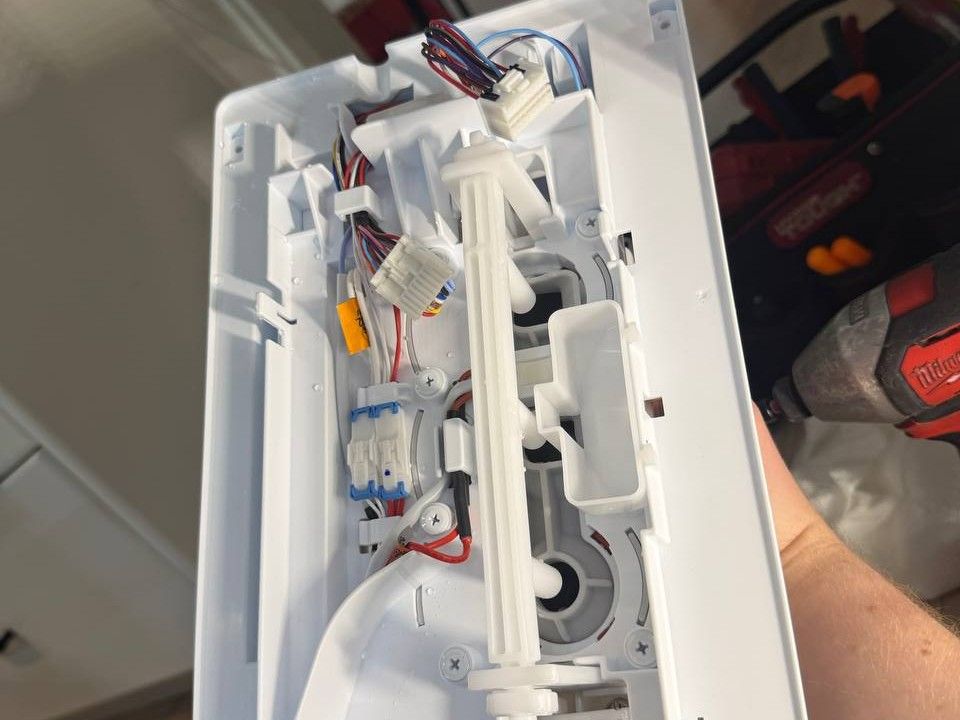
An ice maker is a small machine with a simple routine: a valve opens for a few seconds, water fills a mold, the freezer turns it solid, a heater loosens the cubes and a motor sweeps them into the bin. On harder water, the usual enemy of that routine is mineral crust in the valve and fill cup. Shoreline's Tolt supply is so soft, around 1.2 to 1.4 grains per gallon, that crust is rarely the story here. When cubes shrink or stop, we look first at how much water is getting through, and only then at the ice maker module, the freezer temperature and the dispenser.
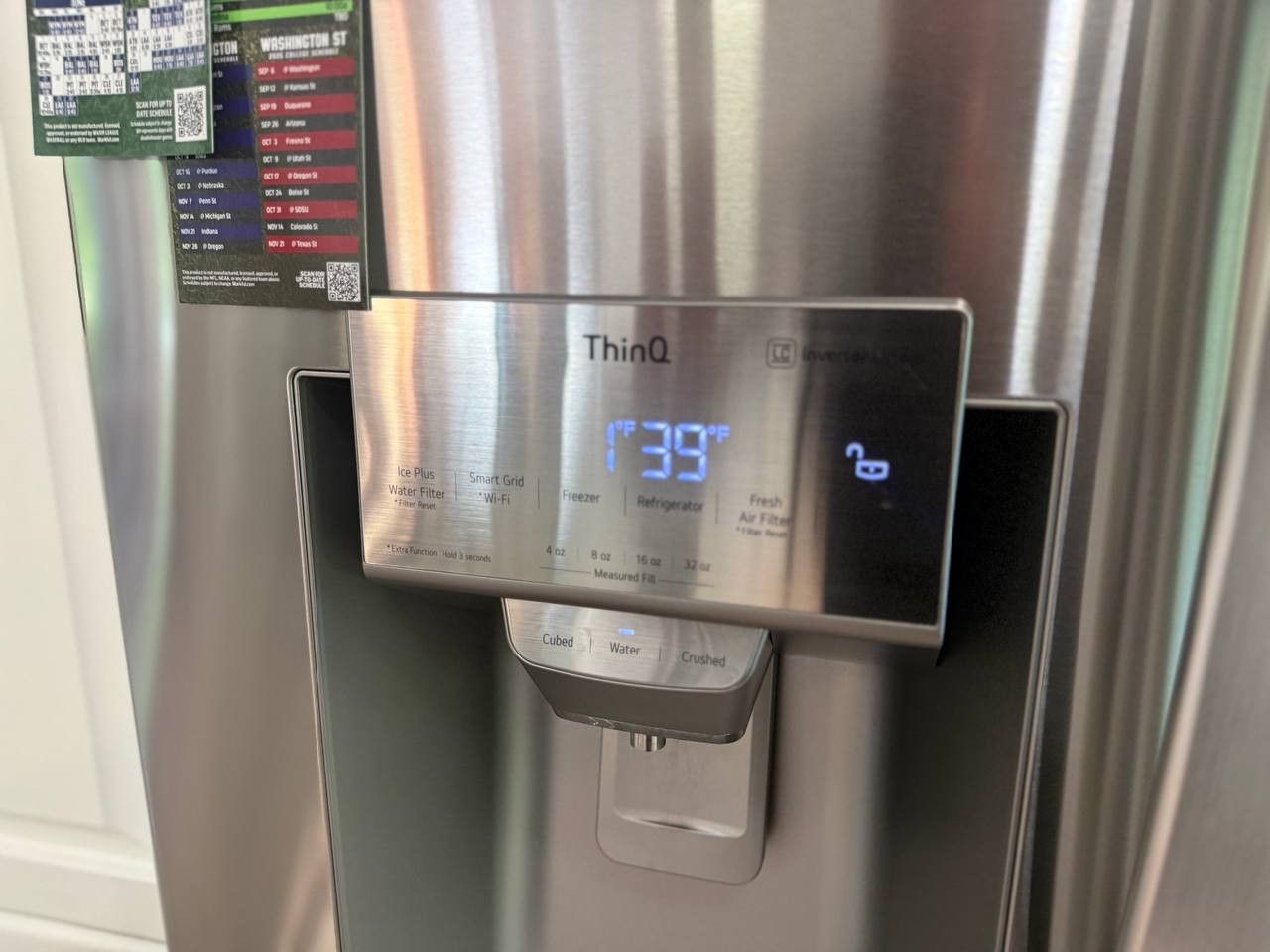
Whirlpool, GE, LG, Frigidaire and KitchenAid make most of the refrigerator ice makers we meet in Shoreline, whether it is a plain cube tray in a top-mount freezer or a full ice-and-water system in the door. Your technician tests the inlet valve, the fill tube and its heater, the module, the bin auger and the dispenser, and gives you the price in writing before replacing anything. Should the freezer turn out to be warm because of a compressor or refrigerant fault, we tell you at once; sealed-system repair is outside what we do.
What you seeWater dispenses but the bin stays empty
Likely causeFailed ice maker module, or a freezer too warm to freeze the mold
What we doCheck the freezer temperature, test the module and replace it if it won't cycle
What you seeCubes come out small, hollow or as thin slivers
Likely causeLow pressure from an old filter, a kinked line or a narrowed valve
What we doMeasure flow at the fridge, replace the filter and repair the supply
What you seeBin full of fused ice that jams the dispenser
Likely causeMelt and refreeze after an outage, or a valve that seeps between fills
What we doBreak up the ice, check the auger, and replace the valve if it drips
What you seeNeither water nor ice from the door
Likely causeFailed inlet valve coil or a frozen tube in the door
What we doTest the valve, thaw and protect the line, check the door heater
What you seeTray overflows and sheets of ice form in the freezer
Likely causeInlet valve sticking open or a mold heater fault
What we doReplace the valve or module and dry out the freezer
What you seeShutoff arm stuck up and no ice is harvested
Likely causeBent arm or a blocked bin sensor
What we doStraighten or replace the arm, clean the sensor window and run a full cycle
Before we touch the ice maker, your technician checks how fast water reaches the back of the fridge. If a glass takes a long time to fill at the door, the ice maker is almost certainly starving too. On Shoreline's soft water, the most common reason is a filter that has stayed in place too long: as the cartridge loads up, pressure at the valve drops until every cube comes out small. Changing the filter on the schedule in your manual is one of the few safe checks you can do yourself, and it is worth doing before you book.
Plumbing age is the next suspect. In many post-war houses the refrigerator line was added decades after the kitchen was built, often tapped into a basement copper pipe with a saddle valve that pierces the pipe wall. Those valves narrow and seep with age, and plastic tubing kinks behind a fridge that gets pushed back too hard. Replacing the inlet valve and tubing inside the refrigerator is our job, and so is the flexible line behind it. A valve on the house plumbing is a plumber's, and we will tell you which side of the shutoff the problem sits on.
The townhomes around the 148th and 185th stations bring the opposite setup: new lines in the walls and refrigerators with an ice maker in the door, another in the freezer drawer, or both. Two ice makers mean two sets of valves, heaters and sensors, and a door system that depends on a small heater to keep its chute and fill tube from icing. After a long outage, like the November 2024 windstorm, when some 43,000 City Light accounts lost service, empty the bin before the ice refreezes into a block that jams the auger.
Ice maker repairs start at $289, the highest starting point of our six categories, and the table nearby compares water line, valve and module repairs. Starting prices are not a quote; your technician sets the actual price in a written estimate after the diagnostic. The $95 diagnostic is credited to the repair once you approve it.
| Frozen fill tube thawed and protected | from $289 |
|---|---|
| Ice maker inlet valve | from $289 |
| Ice maker assembly | from $295 |
| Diagnostic visit | $95, counted toward the repair |
| Another appliance on the same call | $10 off its diagnostic |
2026 starting prices for Lynnwood and nearby towns. The $95 diagnostic counts toward any repair you approve, and your technician writes the exact figure down before work begins.
An ice maker repair makes sense when the refrigerator around it is healthy. A new module or inlet valve restores ice on most models in a single visit, and in Shoreline's soft water a repaired ice maker tends to stay clean. We advise against it when the refrigerator itself is failing, for instance when the freezer is warming because of a compressor or refrigerant problem we can't repair; putting a new ice maker into a fridge with a dying sealed system is money spent twice. Some owners of older fridges simply switch the ice maker off and go back to trays, which is a perfectly reasonable choice, and we can shut off and cap the supply so the valve can't drip. For townhome fridges with ice in the door, a working dispenser often matters enough to justify the repair. You get the written price and our opinion, and you make the call.
Follow the interval in your refrigerator's manual or on the filter itself, and change it sooner if ice production drops or the water dispenser slows. In Shoreline, sediment and chlorine are what load a filter, not hardness. Use the cartridge your model calls for; a poorly fitting one can leak or restrict flow, and that mimics a failed valve.
Yes. Bottom-freezer and French-door refrigerators often hide the ice maker in the upper fresh-food compartment or inside the freezer drawer, and both layouts are routine for us. The parts that fail are the same, a module, a valve, a fill tube heater or a fan, though reaching them takes a little more care with the drawer rails.
Stop using it for now. Turn the ice maker off, close the water shutoff feeding the refrigerator if you can reach it, and towel up what has spilled. A leak at the door often comes from a cracked fill tube or a valve that won't close, and either can soak a floor quickly. Then call or book online.
Then the freezer is the repair. Defrost failures and evaporator fans are the usual causes, and we fix both. The ice maker will start producing again once the freezer holds temperature. If the diagnosis instead points to the compressor or a refrigerant leak, we tell you right away, since sealed-system work is not something we take on.
Often. Common modules, inlet valves and heaters ride in the vehicle, and giving us the model number when you book improves the odds. Some models use parts we have to order; if so, we confirm the price in writing, order it and set a return visit as soon as it arrives.
Something not working?
To book an ice maker repair in Shoreline, call (425) 287-5458 or use the online form. We credit the $95 diagnostic to the repair you approve, and veterans, seniors 65 and over and active-duty military households can take up to $18 off the repair.
Ice makers
Small, thin or hollow ice cubes usually trace back to the water supply: saddle valves in older houses, wall valve boxes in new townhomes, filters and sensors.
Book a repair
Three quick steps. We call back to confirm a time; requests that come in during the morning can usually be seen the same day.
Rather call? (425) 287-5458 · Mon–Sat 8–7