Ice makers
Small or hollow ice cubes: following the water back to the wall
Small, thin or hollow ice cubes usually trace back to the water supply: saddle valves in older houses, wall valve boxes in new townhomes, filters and sensors.
Ice makers · Kenmore
An empty ice bin rarely means the whole refrigerator is failing. In Kenmore the cause is usually a frozen fill tube, a worn water valve or a tired ice maker module, and your technician can often replace the failed piece on the spot.
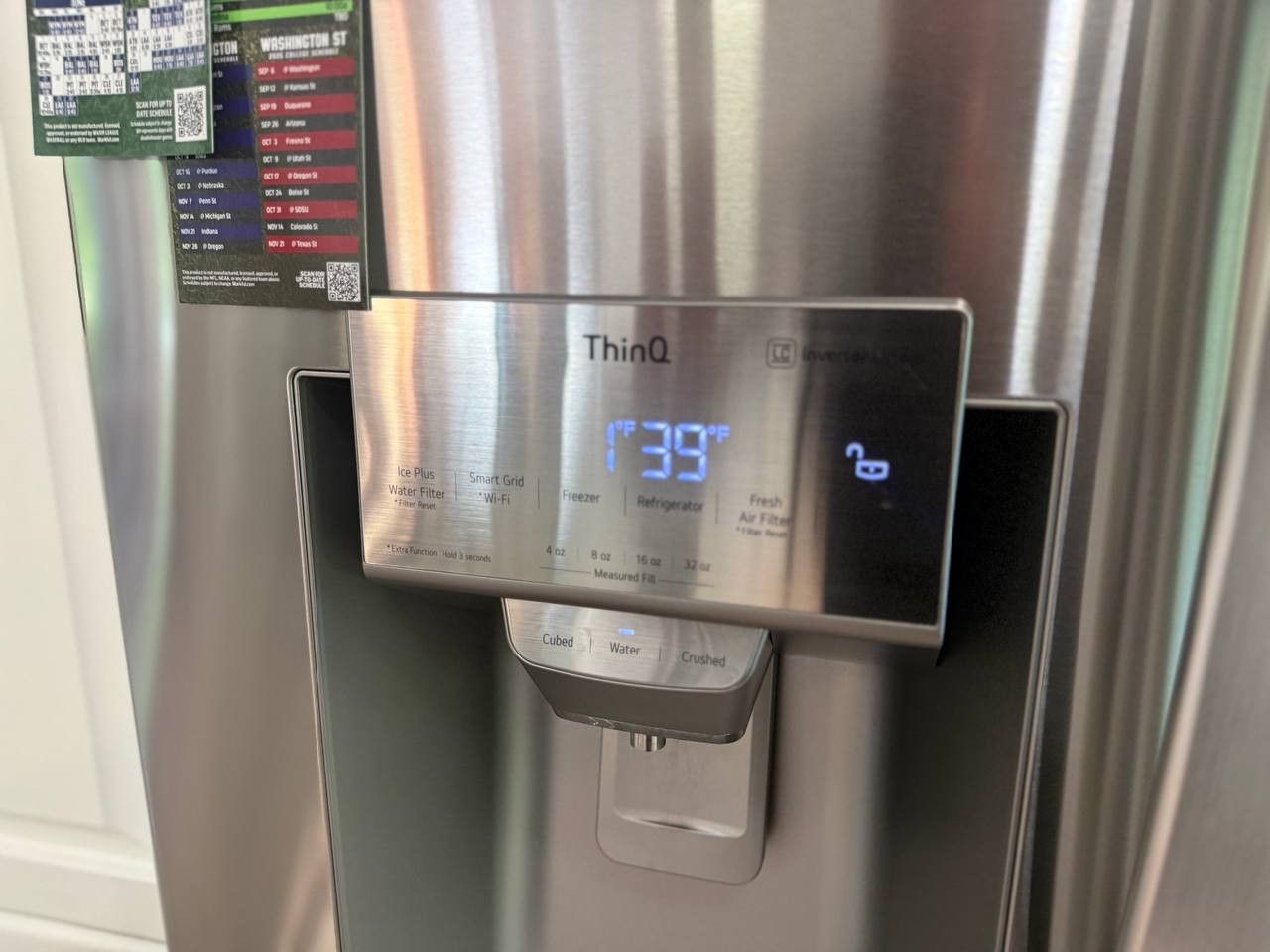
Ice makers built into the refrigerator or freezer are among the most common small repairs we do in Kenmore. Each one depends on a short chain: a supply line from the house, a water inlet valve at the back of the fridge, a fill tube into the freezer, the ice maker module itself, and a freezer cold enough to set the cubes. Break any link and the bin stays empty. Our first job is to find which link failed, and that usually takes only a few minutes once we can watch a fill cycle and test the valve.
Kenmore-label refrigerators are plentiful here, and their ice makers follow whichever maker built the fridge. A 106 prefix means a Whirlpool-style module in the freezer, while LG-built models with a 795 prefix often put the ice compartment up in the refrigerator door, fed cold air by its own fan and sealed with its own gaskets. Each has its own habits, and we carry inlet valves, fill-tube parts and the common modules, so many ice maker repairs finish on the first visit. We work on GE, Frigidaire, Whirlpool, KitchenAid, LG and built-in brands as well.
What you seeNo ice, bin empty
Likely causeShutoff arm raised, freezer too warm, fill tube frozen, or a failed inlet valve
What we doCheck the arm and freezer temperature, thaw the tube, test the valve's coil and flow
What you seeSmall, hollow or short cubes
Likely causeLow water pressure, a clogged filter or a weak valve
What we doMeasure flow, test with the filter bypassed, replace the valve if it falls short
What you seeCubes fused into a block
Likely causePartial thaw during an outage, a door left ajar, or a warm freezer
What we doEmpty the bin, check the door seals and the defrost system, then cycle the module to confirm it harvests
What you seeWater dripping behind the fridge
Likely causeCracked inlet valve, loose fitting, or a seeping saddle valve on the house line
What we doTighten or replace the fitting, replace the valve, point out problems with the house valve
What you seeIce won't dispense
Likely causeFrozen chute, jammed auger or failed auger motor
What we doThaw and clear the chute, test the auger motor and the dispenser switch, replace whichever has failed
What you seeIce tastes stale or odd
Likely causeOld water filter, or cubes sitting in the bin too long
What we doReplace the filter, empty the bin, look over the supply line material
Many Kenmore houses from the 1950s through the 70s got their first ice-making refrigerator years after they were built, and the water line was often added with a saddle valve clamped onto a copper pipe in the crawl space, the garage or under the sink. Those valves pierce the pipe and can clog or seep over time. When an ice maker has slowed to a trickle, we check pressure at the back of the refrigerator first, so we don't replace a good inlet valve that sits at the end of a half-blocked tap. Plastic supply tubing from the same era can also turn brittle and crack where it bends behind the fridge, and we replace that run whenever we find it.
The Northshore Utility District's Tolt water is soft, so mineral scale inside valves and fill cups causes less trouble here than in harder-water areas. That shifts the usual failures toward freezing and wear. A fill tube freezes when the freezer runs too cold, when the valve drips between cycles, or when a door has been left slightly open; an inlet valve simply wears out from years of opening and closing. Both are quick parts once identified, and we check the freezer's defrost system at the same time, because a tube that keeps freezing is often a symptom of trouble elsewhere.
Kenmore was dark along with hundreds of thousands of other PSE customers during the November 2024 bomb cyclone. When power returns after a long outage, partly melted ice in the bin refreezes into a single slab, and the dispenser auger strains against it until the motor or a coupling gives up. If your dispenser hasn't worked properly since that storm, empty the bin and let the chute thaw first. If that doesn't bring it back, the auger motor and the door's dispenser switch are the next suspects, and both are parts we test in place.
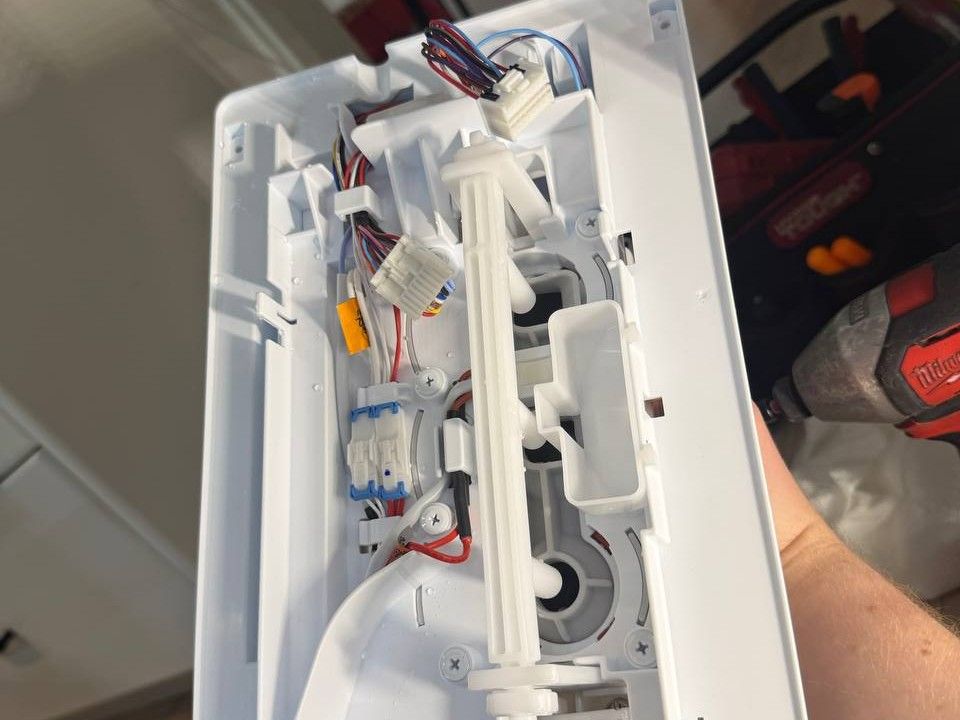
Ice maker repairs start from $289, a category that covers fill-tube fixes, inlet valves and replacement modules. Those starting prices aren't a quote for your unit; the written estimate after the $95 diagnostic is. Approve it and the diagnostic is credited toward the repair. And if the problem turns out to be a raised shutoff arm or a filter you can change yourself, we tell you so, and the diagnostic is the whole bill. If a second appliance in the kitchen needs checking during the same visit, its diagnostic drops by $10.
| Frozen fill tube thawed and protected | from $289 |
|---|---|
| Ice maker inlet valve | from $289 |
| Ice maker assembly | from $295 |
| Diagnostic visit | $95, counted toward the repair |
| Another appliance on the same call | $10 off its diagnostic |
2026 starting prices for Lynnwood and nearby towns. The $95 diagnostic counts toward any repair you approve, and your technician writes the exact figure down before work begins.
Ice maker repairs are nearly always worth doing on a refrigerator that keeps food cold, since a module, a valve or a fill tube runs to a small fraction of what a new fridge would. The decision changes when the ice maker is a symptom rather than the problem. A freezer that can't hold temperature because the compressor has failed or the refrigerant has leaked needs sealed-system work, which we don't do; you hear that at the diagnostic, along with our view on whether the fridge is worth keeping. On LG-built door compartments, repeated frosting despite new seals and a working fan can also tip the balance after several repairs. Some owners simply switch the ice maker off and use trays, and we can confirm whether the rest of the refrigerator is healthy enough for that to be a sensible plan.
First make sure the shutoff arm or switch isn't in the off position and that nothing in the bin is holding the arm up. Check that the freezer feels properly cold and that the water filter isn't long overdue. If the water dispenser also runs slowly, the filter or the supply is the likely problem. Beyond that, book a visit and we'll test the valve and module.
The ice maker is getting too little water in each fill. A clogged filter is the most common reason, followed by low pressure from a partly closed or clogged supply valve, then a weak inlet valve. In Kenmore's older houses, a saddle valve on the copper line is a frequent restriction. We measure flow at the back of the fridge to tell these apart.
We repair the ice makers built into household refrigerators and freezers. Countertop ice makers fall under small countertop appliances, and commercial ice machines under commercial refrigeration, and we don't take on either one. If you aren't sure what you have, describe it when you call and we will tell you straight away.
Usually not. Most ice maker faults are in the module, the valve or the fill tube, and the refrigerator itself is fine. Watch the freezer temperature, though. If cubes are soft, the freezer feels less cold than usual and food is softening, the ice maker may just be the first thing to show a cooling problem, which we diagnose at the same visit.
Yes. If your household includes a senior 65 or older, a veteran or an active-duty service member, up to $18 comes off the ice maker repair. It applies to the repair, not to the $95 diagnostic. Tick the box in the booking form or mention it when you call, and it shows on your written estimate.
Something not working?
Empty ice bin? Call (425) 287-5458 or book online for a Kenmore ice maker repair. The $95 diagnostic goes toward any repair you approve, and households of seniors 65+, veterans and active-duty military get up to $18 off it.
Ice makers
Small, thin or hollow ice cubes usually trace back to the water supply: saddle valves in older houses, wall valve boxes in new townhomes, filters and sensors.
Book a repair
Three quick steps. We call back to confirm a time; requests that come in during the morning can usually be seen the same day.
Rather call? (425) 287-5458 · Mon–Sat 8–7