Dryers
Dryer thermal fuse keeps blowing: find what is overheating it
A dryer thermal fuse that blows again and again is a symptom. Crawl-space vents in older houses, stuck thermostats, grounded elements and slipping blowers.
Dryers, gas and electric · Kenmore
Kenmore laundry rooms run both PSE gas dryers and 240-volt electric ones, and both fail in familiar ways: no heat, slow drying, a squeal. We work out whether the fault sits in the machine, the vent or the house supply, then fix what's ours.
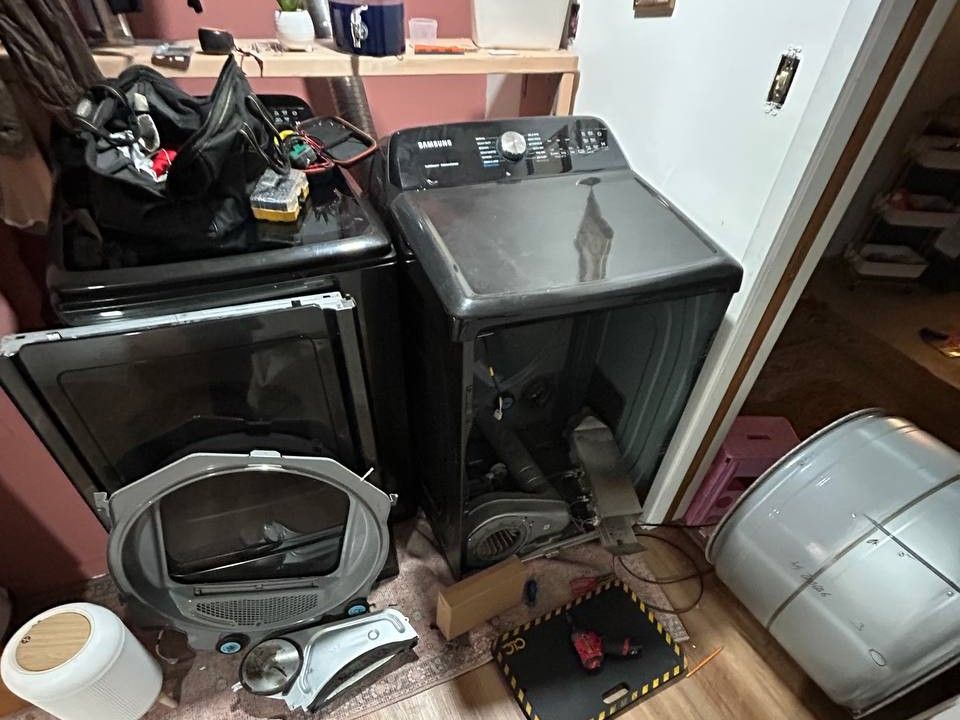
Kenmore splits almost evenly between electric and gas home heating, roughly 51% to 47%, so plenty of houses have a gas line in the laundry room and plenty of others run a 240-volt electric dryer. The symptoms overlap. Clothes still damp after a full cycle can mean a dead heating element, a weak gas igniter, a blown thermal fuse, or simply a vent so packed with lint that the hot air has nowhere to go. Your technician checks airflow at the outside hood before condemning any part, because replacing a heater on a choked vent only buys a few weeks.
Kenmore-label dryers are easy to find here, and many carry a 110 prefix, which marks a Whirlpool design. Those machines share a familiar set of wear parts: thermal fuses, cycling thermostats, idler pulleys, drum rollers and belts, all of which we carry. LG-built models with a 796 prefix lean more on sensors and electronic controls, and Frigidaire-built ones with a 417 prefix ride on a rear bearing and front glides rather than a set of rollers. Either way, a dryer that quits early in the week is often drying again the same day, provided the part is in the vehicle.
What you seeDrum turns, no heat (electric)
Likely causeOne half of the double breaker tripped, or a failed element, thermal fuse or high-limit thermostat
What we doCheck voltage at the cord, meter the heater circuit, replace whichever part is open
What you seeDrum turns, no heat (gas)
Likely causeIgniter glows but no flame: gas valve coils; no glow: igniter or flame sensor
What we doWatch the ignition sequence, test igniter and coils, replace the failed piece
What you seeClothes need two cycles
Likely causeLint-packed vent, crushed foil duct behind the dryer, or a stuck flap at the hood
What we doMeasure airflow, clear the duct we can reach, tell you if the run inside the building needs more
What you seeSquealing, thumping or scraping
Likely causeWorn drum rollers, idler pulley, belt or front glides
What we doOpen the cabinet, replace rollers and idler as a set, then run the drum empty to confirm it's quiet
What you seeWon't start at all
Likely causeDoor switch, thermal fuse or start switch; on newer models the control board
What we doTest each part of the start circuit and replace the one that's open
What you seeStops early with damp clothes
Likely causeResidue from dryer sheets filming over the moisture sensor bars
What we doClean the sensor bars, test the sensing circuit, check the vent, and suggest skipping sheets for a while
About 13% of Kenmore's homes are in buildings of 20 to 49 units, largely downtown, and those apartments and condos often tuck the dryer into a closet whose exhaust travels through the building to a roof or side wall. A run that long gathers lint quickly. The dryer senses its own overheating and pops a thermal fuse, someone replaces the fuse, and two months later it blows again because the duct is still choked. We clean what is reachable from the unit, show you the airflow before and after, and say so plainly when the rest of the run needs the building's attention. Lint that escapes into the cabinet also gathers around the heater housing, so we vacuum it out while the panels are off.
In the early-1950s plats of Inglewood and Uplake Terrace, dryers often sit in a garage or utility room with a short vent through an outside wall. That is easy to clean but prone to crushed foil hose when the dryer gets pushed back. Houses from the 1980s and 90s, roughly a third of the town, more often put laundry upstairs with a vent through the roof, where a nest or a stuck flap can stop airflow without anyone noticing from below. If your dryer heats but clothes stay wet, step outside while it runs and feel for a strong, warm stream at the hood.
Gas dryers in Kenmore draw from Puget Sound Energy. If you ever smell gas at the dryer, don't flip switches or unplug anything; get out of the house first, then phone PSE or 911 once you're outside. Short of that, the gas side of a dryer comes down to a small set of parts, and we test the igniter, valve coils and flame sensor in place, with the burner running, so you can see what failed. Keep the floor around a gas dryer clear of stored paint, fuel cans and drifts of lint; garages in town tend to collect all three.
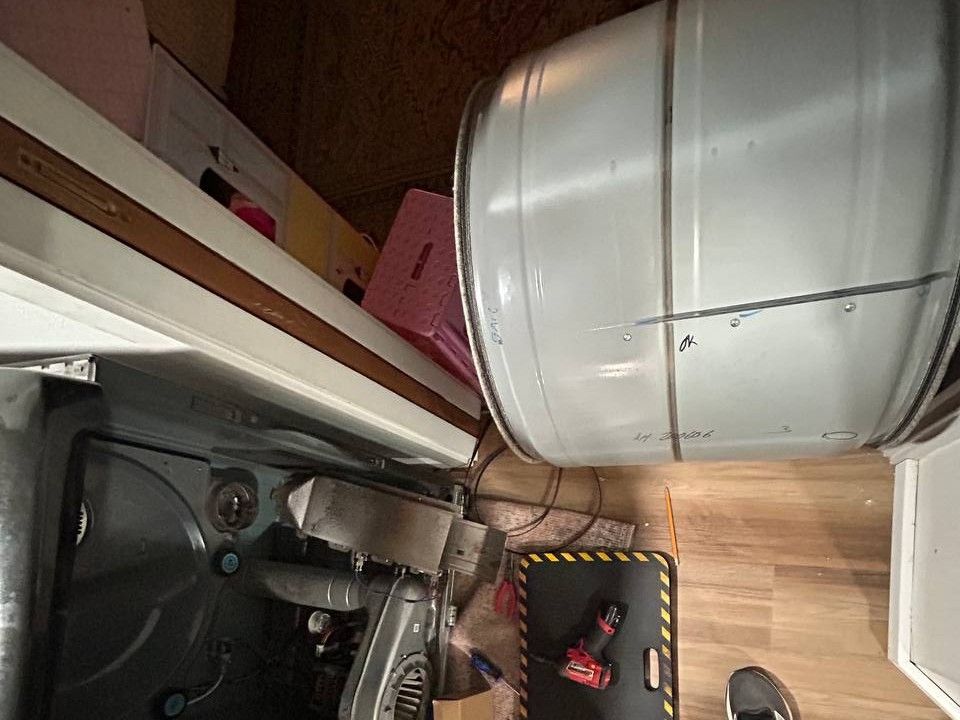
Dryer repairs start at $229, the lowest line in our dryer table, and rise with the part involved. That starting figure isn't your quote. Your technician puts the real number on a written estimate after the $95 diagnostic; approve the work and the diagnostic is credited to it, or say no and the diagnostic is the only charge. A washer checked on the same trip gets $10 off its own diagnostic.
| Blocked vent cleared to the outside | from $229 |
|---|---|
| Thermal fuse or cycling thermostat | from $229 |
| Heating element (electric) | from $239 |
| Drum rollers, idler pulley, belt | from $239 |
| Igniter and gas valve coils | from $249 |
| Control board | from $259 |
| Diagnostic visit | $95, counted toward the repair |
| Another appliance on the same call | $10 off its diagnostic |
2026 starting prices for Lynnwood and nearby towns. The $95 diagnostic counts toward any repair you approve, and your technician writes the exact figure down before work begins.
Dryers are among the easier machines to keep running. Their parts are few and mostly mechanical, so a fuse, element, igniter, belt or roller set usually costs a fraction of a new dryer, and a sound cabinet will outlast several of them. The case for replacing grows with rust inside the drum that snags clothes, a cracked drum seam, or an electronic board on an older model where the board alone nears the price of a new machine. In a downtown condo, the dryer half of a stacked pair is often worth repairing even when it is older, since swapping the pair means matching a closet and a shared vent. In a roomy 1960s garage, a newer dryer may simply be the easier answer. We give you both numbers and leave the decision with you.
Because something keeps overheating it, and a restricted vent is the usual culprit. The fuse is a safety part that sacrifices itself when exhaust air can't escape, so a new fuse on a choked duct only resets the clock. We replace it, check airflow and test the cycling thermostat and heater, since a failed thermostat can overheat the drum even with a clean vent.
Leave the house right away, without touching light switches or unplugging anything, and call PSE or 911 once you are outside. Don't go back in until they tell you it is safe. After the gas side has been checked and cleared, we can come out to repair the dryer itself, including the valve coils, igniter and flame sensor.
We clear the vent connection behind your dryer and the section we can reach from inside your unit, and we measure airflow so you can see the difference. Long shared runs inside walls or up to a roof can need access we don't have. When that's the case we say so, so you can raise it with the building.
Yes. Find the dryer's double breaker in the panel and switch it fully off and back on, since one side can trip on its own. Clean the lint screen and make sure the vent hose behind the dryer isn't flattened. If there is still no heat, stop there and book a visit; the next checks involve 240 volts inside the cabinet.
Yes, and the second machine's diagnostic comes $10 off. Many Kenmore laundry calls end up involving both, since a washer that leaves clothes soaking makes any dryer look slow. Mention both appliances when you book, and your technician sets aside the time to check each one before writing up either estimate.
Something not working?
Dryer running cold or taking forever? Call (425) 287-5458 or book a Kenmore visit online; morning callers have the clearest shot at a same-day slot. The $95 diagnostic is applied to the repair you approve, and seniors 65 and older, veterans and active-duty service households get up to $18 off.
Dryers
A dryer thermal fuse that blows again and again is a symptom. Crawl-space vents in older houses, stuck thermostats, grounded elements and slipping blowers.
Book a repair
Three quick steps. We call back to confirm a time; requests that come in during the morning can usually be seen the same day.
Rather call? (425) 287-5458 · Mon–Sat 8–7