Dryers
Dryer thermal fuse keeps blowing: find what is overheating it
A dryer thermal fuse that blows again and again is a symptom. Crawl-space vents in older houses, stuck thermostats, grounded elements and slipping blowers.
Dryers · Brier · gas and electric
About 65 percent of Brier homes heat with gas, and many laundry rooms have a gas line for the dryer as well. We repair gas and electric dryers here, often in one visit, and always with a written estimate first.
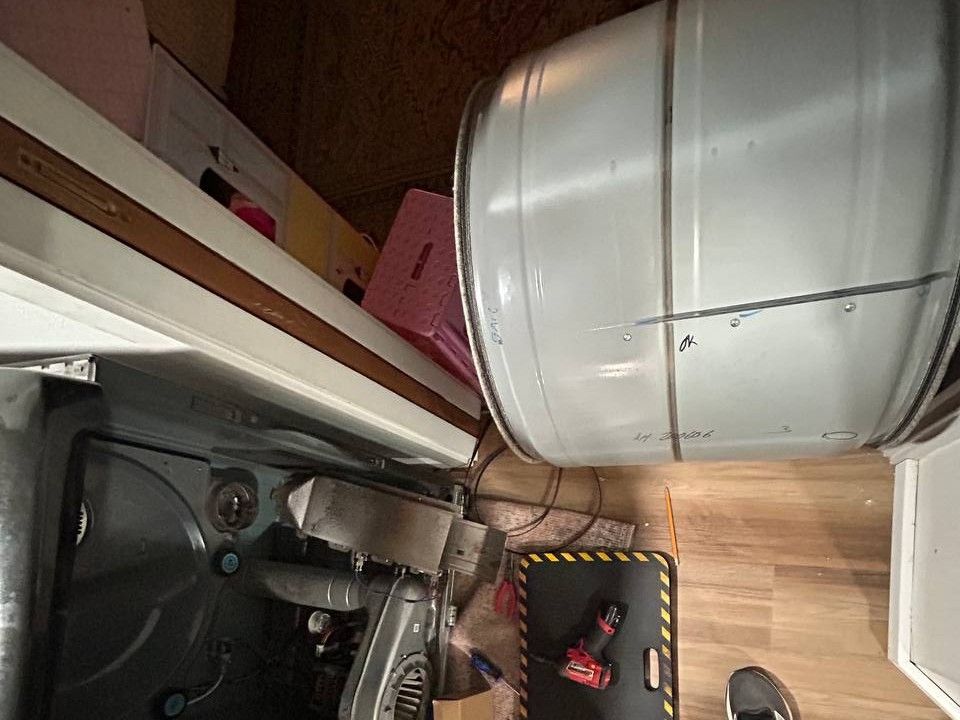
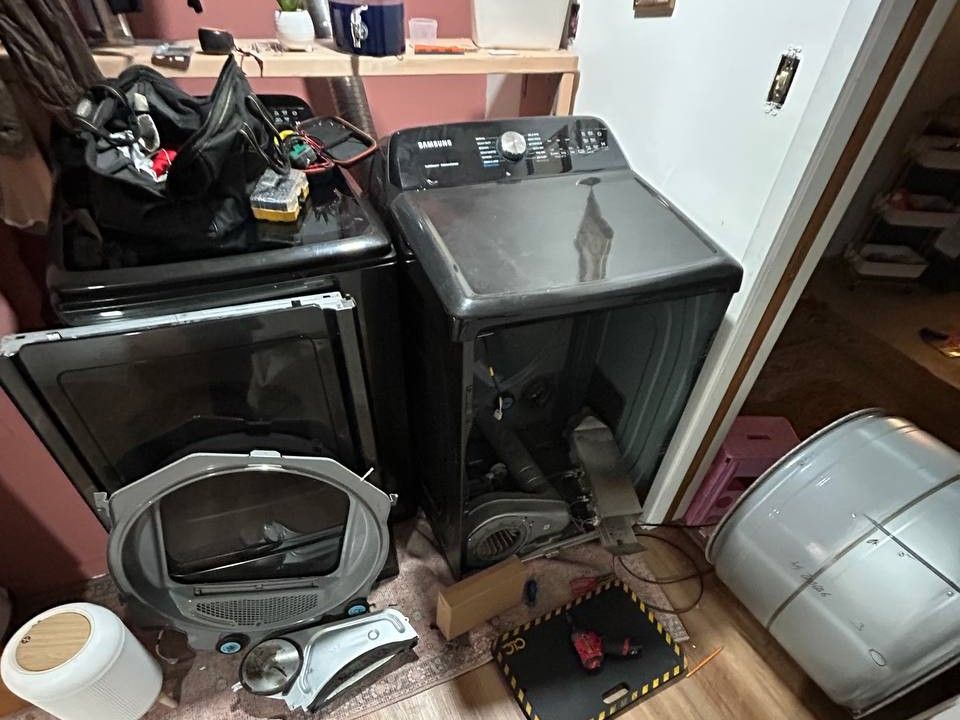
Gas dryers make up a bigger share of our dryer work in Brier than in almost any other town we cover. With gas heating about two-thirds of homes, many houses have a gas stub in the laundry, and owners often stay with gas through each replacement. Electric dryers are common too, especially in houses that heat electrically. Either type ends up doing a great deal of drying for a family through a long, wet Puget Sound winter. Bedding, sports uniforms and towels from a full house keep the drum turning most days of the week.
The repairs follow the type. Gas dryers fail at the igniter, the gas valve coils or the flame sensor; electric dryers at the heating element, thermal fuse or cycling thermostat. Both share drum rollers, idler pulleys, belts, door switches and motors. Your technician tests before replacing anything, checks the vent airflow at the back of the machine, and writes the price before the work begins. Most dryer repairs are finished on the first visit, because those parts travel in the vehicle.
What you seeGas dryer: igniter glows, then no flame
Likely causeGas valve coils weak or failed
What we doReplace the coil set and test through several cycles
What you seeGas dryer: no glow at all
Likely causeCracked igniter, or an open flame sensor or thermal fuse
What we doTest each in turn and replace the failed part
What you seeElectric dryer tumbles but stays cold
Likely causeBurned element, blown thermal fuse or failed thermostat
What we doMeter the circuit and replace the failed component
What you seeSqueal or thump that grows louder over months
Likely causeWorn drum rollers or idler pulley
What we doReplace rollers and pulley, inspect the belt
What you seeDrying takes two cycles, top of dryer very hot
Likely causeVent restricted by lint, a crushed hose or a blocked hood
What we doMeasure airflow, clear the hose and the reachable duct
What you seeDryer stops partway through a cycle
Likely causeMotor overheating, or a thermostat cutting out
What we doTest the motor and thermostats; check the vent load
Long vent runs are the hidden cost in many Brier houses. Where the laundry sits in the middle of the house or upstairs, the duct may travel through a wall, across a ceiling or out through the roof before it reaches fresh air. Every foot and every bend reduces airflow, lint collects where the duct turns, and the dryer runs hotter and longer. That heat kills thermal fuses and igniters early. We check airflow on every dryer visit and clear the transition hose and the section we can reach; a long run through finished walls may need dedicated duct cleaning, and we will tell you if so. Some 1990s plans also send the vent down through the floor and out a crawlspace wall, where the duct can sag, hold water and get crushed.
Outside, the vent hood matters. On wooded lots, leaves, needles and the odd bird nest end up in the flapper, and moss can grow around a hood on a shaded wall. A hood that cannot open fully makes the whole system work harder. It is a safe check to do yourself: with the dryer running, the flap should lift and you should feel warm, moving air. Ground-level hoods near shrubs and garden beds collect debris too, and one tucked behind a deck or hedge is easy to forget. A hood with a screen over the opening is the wrong type for a dryer, because lint clogs the mesh; a louvered or flapper hood without a screen is what the vent needs.
With so many gas dryers in town, gas safety comes up often. If you catch a gas smell near the laundry, take everyone out of the house and call PSE or 911 from a distance; do not operate switches or try to shut anything off inside. Once it is safe, we diagnose and repair the dryer’s gas valve and burner, and tell you if the flexible connector behind the machine is old enough to be replaced. The utility decides when the line is safe to use again, not us.
Dryer repairs start at $229 and go up for gas components and control boards. A starting price helps you plan, but it is not your quote; your technician sets the actual figure in writing once the $95 diagnostic is finished, and the diagnostic is credited against the repair if you go ahead. Brier is billed exactly like Lynnwood, with no distance surcharge, and checking the washer on that visit takes $10 off its diagnostic. For seniors 65+, veterans and active-duty military households, up to $18 off the approved repair applies as well.
| Blocked vent cleared to the outside | from $229 |
|---|---|
| Thermal fuse or cycling thermostat | from $229 |
| Heating element (electric) | from $239 |
| Drum rollers, idler pulley, belt | from $239 |
| Igniter and gas valve coils | from $249 |
| Control board | from $259 |
| Diagnostic visit | $95, counted toward the repair |
| Another appliance on the same call | $10 off its diagnostic |
2026 starting prices for Lynnwood and nearby towns. The $95 diagnostic counts toward any repair you approve, and your technician writes the exact figure down before work begins.
Most dryer repairs are worth it, and in Brier the case is stronger than usual because so many households run gas models, which generally cost more to replace than electric ones. An igniter or coil set on a ten- or fifteen-year-old gas dryer is a modest job against the price of a new gas unit and its hookup. We lean toward replacement in a few situations: a drum rusting through and staining clothes, a motor seized on a dryer near twenty years old, or a control board on a model where the board alone nearly matches a new machine’s price. For a family that dries several loads a day, capacity matters too, and a larger drum may save more time than any repair. Whatever the case, your technician puts the repair price in writing first, so you can hold it up against replacement before deciding. Heat-pump dryers are another path for a household that wants lower running costs, though they dry more slowly.
Usually, yes. A gas dryer has a gas pipe with a shutoff valve behind it and plugs into an ordinary 120-volt outlet; an electric dryer plugs into a large 240-volt receptacle and has no gas pipe. The model number tells us as well. Reading either to us on the phone, or typing the model into the booking form, lets your technician bring the right parts.
Yes. Most Kenmore dryers were built by Whirlpool and share its parts, so the common igniters, coils, fuses, rollers and belts are often already in the vehicle. Read the model number from the label inside the door frame when you call, or type it in the booking form, and we can tell which manufacturer built yours and bring the matching parts.
For a little while, but not long. A squeal at startup usually comes from a worn idler pulley or drum glides, and a rhythmic thump from flat-spotted rollers. Left alone, a failing pulley can shred the belt, and then the dryer stops altogether. Replacing rollers and the pulley together is common, and those parts are often on the vehicle.
No. The diagnostic and repair prices are the same wherever the dryer sits, upstairs, in the garage or off the kitchen. Clear the space in front of it and leave room to slide it out a few feet, since rollers, belts and the vent connection are reached from the front or back. Let us know about narrow stairs or tight doorways when you book.
We repair the parts of heat-pump and condenser dryers that sit outside the refrigerant circuit: drums, belts, rollers, pumps, sensors, filters and controls. The heat-pump module itself is a sealed refrigerant system, and as with refrigerators, that is work we do not take on. Most trouble we find on these dryers comes from clogged lint filters and condenser passages, which cause long cycles and error codes.
Something not working?
Call (425) 287-5458 or book online, and mention whether the dryer runs on gas or on electricity. The $95 diagnostic counts toward the repair you approve, and seniors 65+, veterans and active-duty military households can take up to $18 off the dryer repair.
Dryers
A dryer thermal fuse that blows again and again is a symptom. Crawl-space vents in older houses, stuck thermostats, grounded elements and slipping blowers.
Book a repair
Three quick steps. We call back to confirm a time; requests that come in during the morning can usually be seen the same day.
Rather call? (425) 287-5458 · Mon–Sat 8–7