Dryers
Dryer thermal fuse keeps blowing: find what is overheating it
A dryer thermal fuse that blows again and again is a symptom. Crawl-space vents in older houses, stuck thermostats, grounded elements and slipping blowers.
Dryers · Twin Creeks to Silver Lake
In a city where about two of every three homes heat with electricity, nearly every dryer we open plugs into 240 volts. We repair compact, stacked, full-size and ventless dryers across south Everett and Mariner, and the vent path is always our first check.
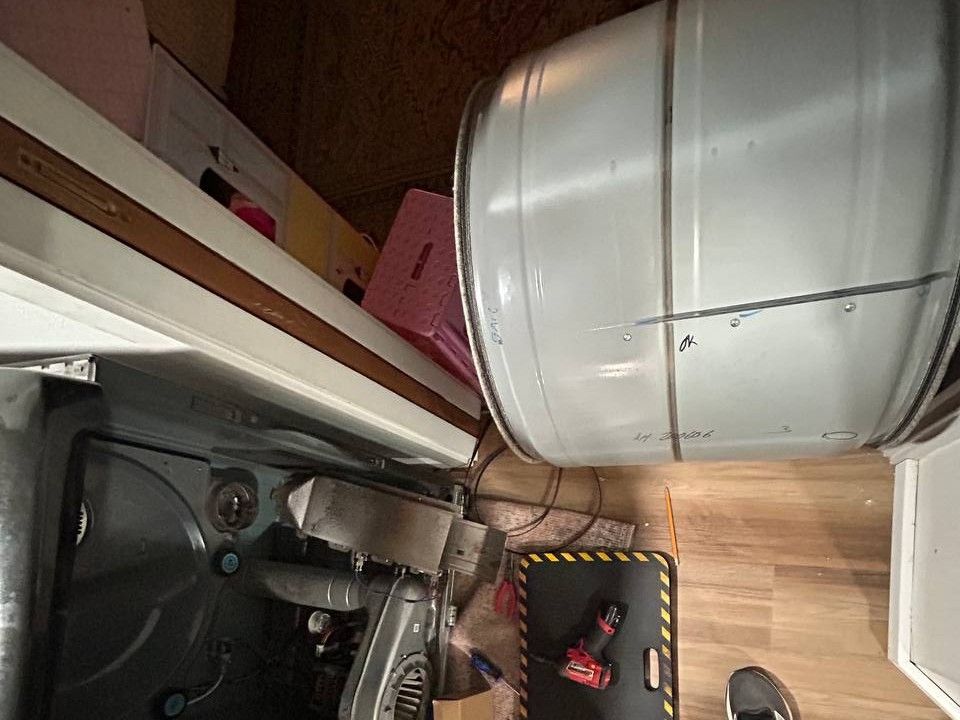
Electric dryers dominate in Everett for the same reason electric heat does: most south-end apartments and condos, and many houses, were built without gas reaching the laundry. That narrows the usual suspects when the drum turns but stays cold: the heating element, the thermal fuse, the high-limit or cycling thermostat, or the power reaching the machine. We test each one with a meter in order, and we check the 240-volt receptacle, because a scorched outlet in an older rental can starve a perfectly good dryer of power. Most of these machines are standard full-size or compact electrics from Whirlpool, Maytag, GE, LG, Samsung and Frigidaire, and their heating circuits are simple enough to test quickly.
Space shapes the rest. Twin Creeks and Evergreen Way buildings hide stacked and compact dryers in hall closets, often venting through a long duct in the ceiling to a far wall. Some newer buildings skip the duct entirely and use ventless condenser or heat-pump dryers from Bosch, Miele, LG or Whirlpool, which collect moisture in a tank or send it down a drain line instead. Those need different parts and different habits, and we repair them too. Closet installs also leave little clearance behind the machine, so the transition hose gets crushed flat each time the stack is pushed back into place.
What you seeElectric dryer tumbles but stays cold
Likely causeOpen element, thermal fuse or high-limit thermostat, or low voltage at the outlet
What we doMeter each part and the receptacle, replace what failed
What you seeClothes damp after a long cycle
Likely causeRestricted duct, crushed transition hose or lint-packed blower
What we doMeasure airflow, clear the run, replace the crushed hose
What you seeVentless dryer stops with a tank or filter warning
Likely causeFull reservoir, clogged condenser, or a blocked drain pump
What we doClean the condenser and filters, test the pump and sensor
What you seeDryer shuts off a few minutes in
Likely causeOverheating from poor airflow, or a failing motor or door switch
What we doRestore airflow, test the motor and switch, replace as needed
What you seeThump or squeal with every turn
Likely causeWorn drum rollers, idler pulley, glides or belt
What we doReplace the worn pieces and check the drum seal
What you seeBurning smell or a hot plug
Likely causeLoose cord connection at the terminal block, or a failing receptacle
What we doShut it off; we repair the cord and block and flag outlet damage for an electrician
In south Everett apartments, a dryer duct can take a long, crooked path: up through the ceiling of the laundry closet, across the unit and out through an exterior wall or the roof. Lint gathers at every bend, and once airflow drops, the dryer runs hotter and longer until its thermal fuse eventually blows. Cleaning the lint screen before every load is the habit that matters most. We clear the duct we can reach from inside the unit and tell you when the blockage is in a section the building manages. Many managers schedule duct cleaning building-wide; if yours hasn't been done in a long while, it's worth asking.
In Everett's manufactured homes the dryer often vents down through the floor and out under the skirting. When that duct comes loose, or ends inside the skirting rather than outside it, lint and warm, wet air collect beneath the home, a fire and moisture risk as well as a drying problem. On every dryer call in a manufactured home we look at where the vent actually ends and how it's supported, and we reconnect or replace the run when it's within reach.
Ventless dryers solve the duct problem and create a maintenance one. Their condenser and lint filters need regular rinsing, and models that pump water to a drain need a clear hose. A ventless dryer that takes longer and longer to finish usually has a coated condenser, not a bad heater. If yours is new to you after a move, ask your technician to show you where everything is during the visit. Heat-pump models run cooler and longer by design, so a long cycle by itself isn't a fault.
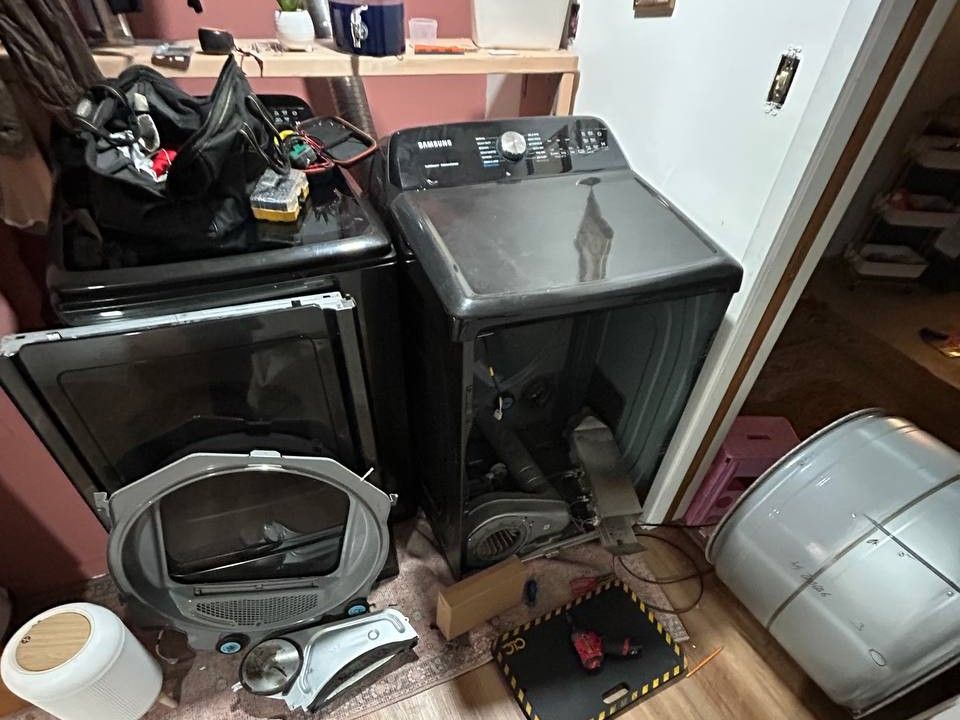
Everett dryer repair starts at $229, the most affordable category we price. That figure opens the range rather than quoting your job; once your technician has checked power, heat, airflow and drive, the exact number goes on a written estimate, and work starts only with your approval. The $95 diagnostic is applied to the repair you approve. A washer checked on the same trip gets $10 off its diagnostic, which suits stacked pairs well. Vent work under a manufactured home goes on the same written estimate before it begins.
| Blocked vent cleared to the outside | from $229 |
|---|---|
| Thermal fuse or cycling thermostat | from $229 |
| Heating element (electric) | from $239 |
| Drum rollers, idler pulley, belt | from $239 |
| Igniter and gas valve coils | from $249 |
| Control board | from $259 |
| Diagnostic visit | $95, counted toward the repair |
| Another appliance on the same call | $10 off its diagnostic |
2026 starting prices for Lynnwood and nearby towns. The $95 diagnostic counts toward any repair you approve, and your technician writes the exact figure down before work begins.
Most Everett dryers are worth repairing. Elements, fuses, thermostats, belts, rollers and even motors cost a fraction of a new machine, and the cabinet and drum outlast them. Ventless condenser and heat-pump dryers cost more to replace, which tips them even further toward repair. Replacement makes sense when a compact or stacked unit needs a board and a motor at the same time, when the drum itself has worn through, or when a rental dryer keeps failing from a vent problem that can't be fixed inside the building. Before replacing a dryer in an apartment with a long duct, have the duct checked; a new dryer on the same restricted run will show the same slow drying and blow the same fuses. In manufactured homes, fixing the vent often matters more than the dryer itself. A heat-pump dryer whose refrigerant circuit has failed is the one clear exception; we don't open sealed circuits on any appliance, so that unit should be replaced. We hand you the repair price in writing either way.
A thermal fuse is a safety part that opens when the dryer overheats, so a repeat failure almost always means the heat has nowhere to go: a clogged duct, a crushed hose behind the machine or a lint-packed blower. Replacing the fuse alone just sets up the next failure. We find and fix the airflow problem, then replace the fuse.
Yes. We work on condenser and heat-pump dryers from Bosch, Miele, LG, Whirlpool and others, which turn up in some newer Everett buildings. Their faults differ from vented dryers: pumps, sensors, condensers and fans rather than ducts. Some of their parts have to be ordered, so tell us the model when you book.
No. A warm plug or outlet, a burning smell or discoloration around the receptacle means a poor connection carrying heavy current. Switch the dryer off at the breaker and don't use it. We repair the cord and terminal block on the dryer; if the receptacle or wiring in the wall is damaged, that part goes to an electrician.
Signs include very long drying times, a hot laundry area, lint around the skirting or damp under the home. With the dryer running, look for warm air coming out where the vent should end, outside the skirting. If there's little airflow or the duct is loose, call us; we check the full run during the visit.
Yes. Gas is less common here, with about 28 percent of homes heating with it, but houses around Silver Lake and elsewhere have gas dryers, and we repair their igniters, valve coils and flame sensors. If you ever smell gas, leave the home and call PSE or 911 from outside before you call us.
Something not working?
Call (425) 287-5458 or book online for dryer repair anywhere in Everett or Mariner. The $95 diagnostic goes toward the repair once you approve it, and seniors 65+, veterans and military families get up to $18 off the repair.
Dryers
A dryer thermal fuse that blows again and again is a symptom. Crawl-space vents in older houses, stuck thermostats, grounded elements and slipping blowers.
Book a repair
Three quick steps. We call back to confirm a time; requests that come in during the morning can usually be seen the same day.
Rather call? (425) 287-5458 · Mon–Sat 8–7