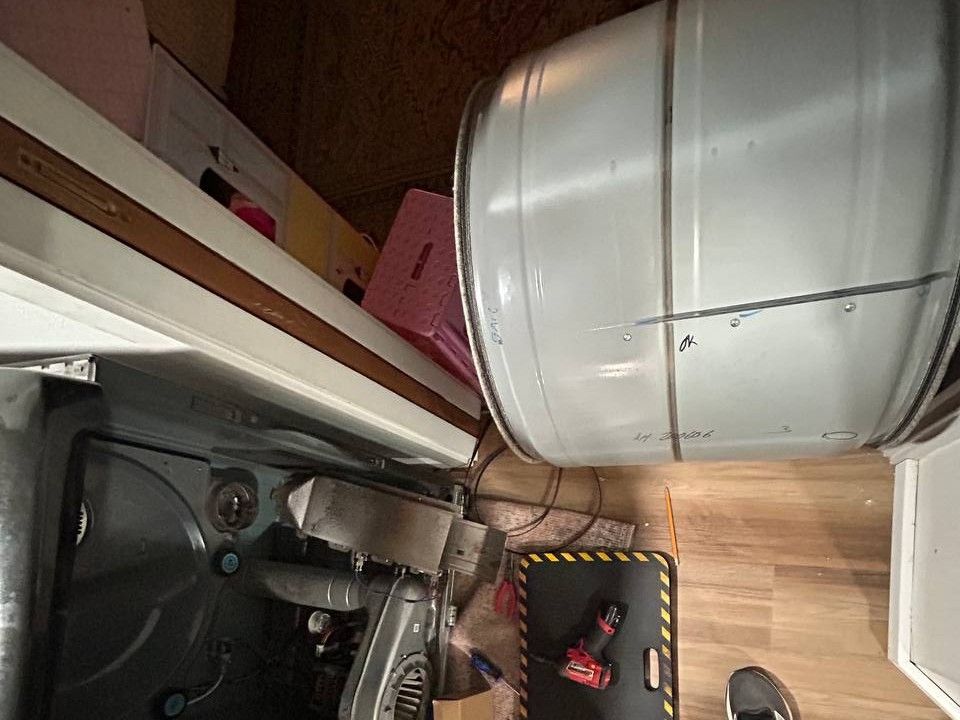
A thermal fuse is a one-time switch. It sits on the dryer's exhaust duct or heater housing, and when the temperature there passes its rating, it opens and stays open. What happens next depends on the design. Many Whirlpool-built dryers, including Maytag, Amana and the Kenmore models built on the same platform, stop completely. Many Samsung electric dryers keep tumbling without heat.
Swapping the fuse takes a few minutes. Swapping it again a few months later means something keeps pushing the dryer past its limit, and a third fuse will not change that. The fuse did its job. The real question is what made it hot.
Never bridge a blown fuse with a wire to get through one more load. That removes the last protection between an overheating dryer and the lint packed inside it.
The crawl-space vent in older houses
About four in ten homes in Lynnwood, Edmonds and Picnic Point were built between 1960 and 1979, and in Mountlake Terrace 44% date from 1950 to 1969. Ramblers and split-levels from those years often got their laundry later, or moved it during a remodel, and the dryer vent drops through the floor, crosses the crawl space and exits through a hood near the foundation. Runs like that fail in a particular way. Flexible foil duct sags between the joists, warm exhaust condenses in the cool, damp air under the house, and wet lint settles in the low spots until the duct is half closed. The hood sits close to the ground, where leaves, moss and the odd bird's nest can hold the flap shut.
A quick check: with the dryer running on high heat, go outside and find the hood. The flap should lift and you should feel a strong, warm stream against your hand. A weak puff means the run is restricted somewhere along the way. Clean the lint screen before every load, and if the dryer sits close to the wall, look behind it for a flattened hose.
Cleaning a long crawl-space run, or replacing sagging foil with smooth metal duct, is work for a vent or duct contractor. Our side is the dryer. We check airflow at the hood and at the back of the machine and tell you which side of the wall the restriction is on.
Causes inside the cabinet
When the vent checks out and fuses keep failing, the cause is inside the dryer.
- Cycling thermostat stuck closed. This thermostat cuts the heat once the exhaust reaches drying temperature. If its contacts weld together, the heat stays on, the high-limit thermostat starts tripping, and sooner or later the fuse goes.
- Grounded heating element. On an electric dryer, a broken coil can sag and touch the element housing. That can keep the element heating after the thermostat has opened its circuit, so the dryer overheats on every load.
- A slipping or cracked blower wheel. Many blower wheels are plastic and grip the motor shaft by a threaded or flatted hub. Once the hub cracks or strips, the motor spins faster than the wheel and airflow drops. The drum still turns, so nobody notices.
- Lint inside the cabinet. Over the years lint escapes past a worn lint-screen housing or a torn drum seal and packs around the heater box and blower. We vacuum it out with the cabinet open.
- Gas dryers carry the same thermostats and fuse, plus a flame-rollout switch beside the burner. A rollout switch that has tripped points to blocked exhaust or a burner problem, so we look at the flame before closing the panel.
- Bulky loads on high heat. A comforter or sleeping bag on the hottest setting, through a vent that is already partly restricted, can be the last push.
If you ever smell gas near a gas dryer, leave the switches and the dryer alone. Get everyone out of the house and call PSE or 911 from outside.
How we track it down
Your technician tests the fuse, both thermostats and the heater or burner circuit, checks the blower wheel on its shaft, and runs the dryer to compare the heat at the drum with the airflow at the hood. The written estimate names what failed and what caused it, so you are not paying for a fuse that will open again next month. If the problem is in the house venting, we put that in writing too, so whoever cleans or rebuilds the duct knows what we found.
Some dryers deserve the repair and some do not. A machine that needs a fuse, a thermostat kit and a blower wheel is usually still worth fixing. One with a rusted drum, worn bearings and a failing motor on top of the fuse problem is a different conversation, and we will say so before you approve anything.
Booking
Call (425) 287-5458 or book online. The $95 visit is credited to the repair when you approve it, and dryer repairs start from $229. Treat that figure as the lowest rung of the price table rather than a quote for your dryer; the exact number is on the estimate after diagnosis. Seniors 65+, veterans and active-duty military households get up to $18 off the repair. Read more on our dryer repair page.