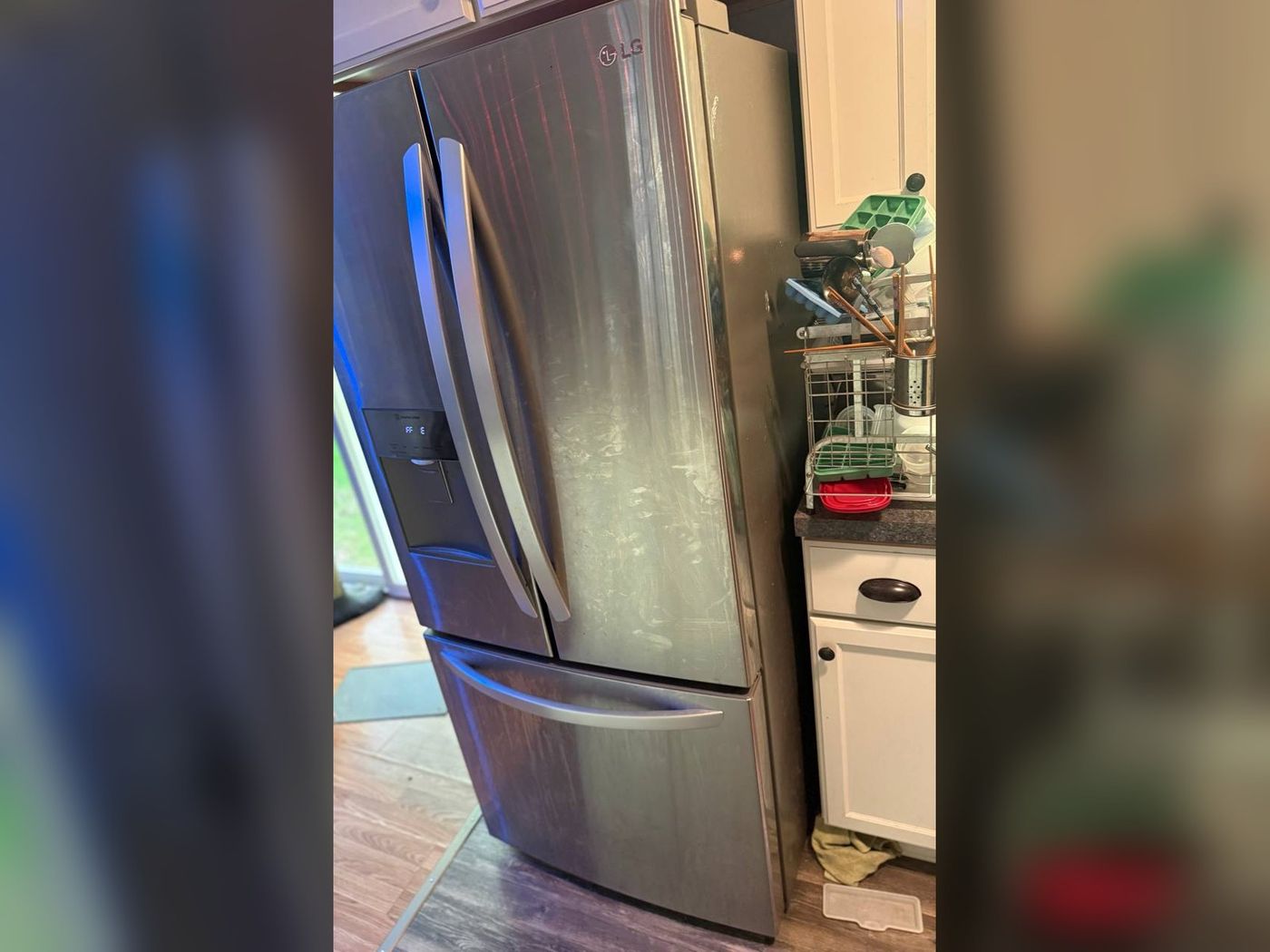
A second freezer in the garage is standard equipment in a lot of houses around Brier, Silver Firs and Mill Creek East. About 95% of Brier's homes are detached houses, Silver Firs sits near 90%, and that usually means a garage with a chest or upright freezer next to the car, holding the bulk buys, the salmon and the summer berries. Those garages are rarely heated, and from October into spring the air in them stays cool and damp. Every time the lid or door opens, some of that moist air goes in, and the moisture it carries ends up as frost.
A little frost is normal. A lot of frost, or frost in an odd place, is the freezer showing you where air or water is getting in. Where it forms is the most useful clue you have.
Reading the frost
- Frost along one edge of the door opening, or on the packages closest to the door: warm, damp air is slipping past the gasket. This is the classic seal pattern.
- A heavy coat of frost on the back wall, or on the panel that covers the coils in a self-defrosting model: the defrost system has stopped doing its job. An air leak alone seldom does this.
- A sheet of ice on the freezer floor or under the bottom drawer: the defrost drain is blocked, so meltwater refreezes instead of running out.
- Frost on only part of the coils while the freezer slowly warms: this can point to a refrigerant problem.
- An even, light layer in a manual-defrost chest freezer: expected. Chest freezers are meant to be defrosted by hand, and in a damp garage they need it more often.
Testing the door gasket
Close the door on a strip of paper and pull it out slowly. You should feel steady drag. Repeat every few inches around the door, paying extra attention to the hinge side and the bottom corners, where gaskets usually flatten first. Anywhere the paper slides out with no resistance is a leak.
Then look at the gasket itself. Wipe it down with warm, soapy water, since dried juice and grime can keep it from sealing. Look for splits at the corners, a section that folds inward, or a stretch that has gone stiff and flat. On many uprights and refrigerator freezer doors, the gasket sits in a channel or under a retaining strip and can be replaced on its own.
Other ways air gets in
- A door that will not swing shut by itself. Uprights and refrigerators are meant to lean back slightly so the door closes under its own weight. On a sloped garage slab, the cabinet can end up level or tipped forward, and the door rests a fraction open. Checking the level is part of our visit.
- Crowded door shelves and bins. A bag of ice or a tall box on a door shelf can hold the door off the gasket by just enough.
- Bottom-freezer drawers. A cracked slide or a broken track roller lets the drawer close crooked. A bag snagged in the rail does the same.
- Sagging doors and bent hinges, often after years of heavy items in the door or children hanging on it.
- Chest freezer lids whose gasket has pulled away at a corner, or whose hinge springs no longer hold the lid down firmly.
Damp months and heat waves
The Puget Sound convergence zone tends to form along the King and Snohomish county line, and Edmonds, Mountlake Terrace, Lynnwood, Shoreline, Lake Forest Park and Bothell are all named among the places it soaks. A small seal leak that hardly matters in a dry kitchen can coat a garage freezer within weeks in that air. Summer brings the opposite strain. During the June 2021 heat dome, the Everett Herald reported unofficial afternoon readings of 109°F in Lynnwood and 107°F in Mill Creek, and a garage freezer with a tired gasket runs nearly nonstop in heat like that.
What we repair and what we don't
Gaskets, hinges, drawer slides, defrost heaters, defrost thermostats and sensors, defrost timers and control boards, evaporator fans and drain heaters are all ours to fix, and your technician clears an iced drain and finds out why it froze in the first place. If the frost pattern and temperatures point to a refrigerant leak or a failing compressor, we tell you right away: we don't do sealed-system work. We will still help you weigh repairing against replacing a freezer of that age and size.
Whatever the cause, never chip ice off the walls or coils with a knife or screwdriver. A punctured line turns a frost problem into a sealed-system failure. Unplug the freezer, move the food to coolers, and let the ice melt on its own.
Booking
Call (425) 287-5458 or book online, and give us the model number from the label inside the door so we can look up the right gasket. The $95 diagnostic counts toward any repair you approve on the written estimate. Refrigerator and freezer repairs start at $259; that is where the category begins, not a quote, and the estimate shows your exact price after the diagnostic. If we also look at the kitchen fridge on the same trip, that second diagnostic is $10 less. More on refrigerator and freezer repair.