Ice makers
Small or hollow ice cubes: following the water back to the wall
Small, thin or hollow ice cubes usually trace back to the water supply: saddle valves in older houses, wall valve boxes in new townhomes, filters and sensors.
Ice makers · Brier
An ice maker in a Brier kitchen is usually fed through tubing installed decades ago, and that tubing explains a good share of our calls. We test the supply, the valve and the module in order and repair what failed.
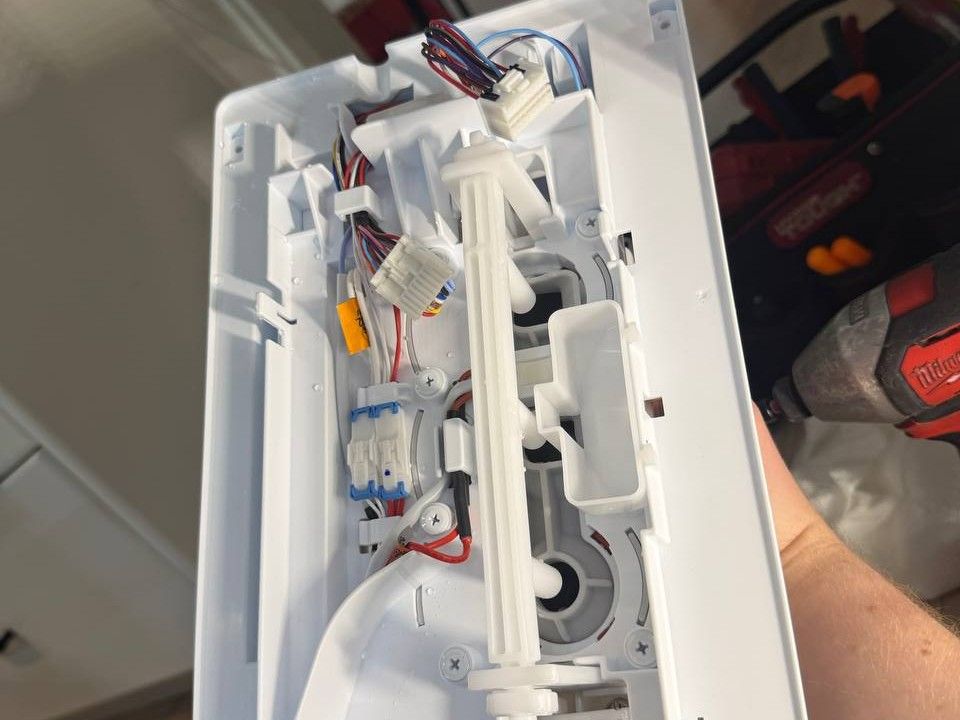
Refrigerators in Brier have been replaced more than once in most houses, but the water line behind them often has not. Many homes from the 1980s and 1990s still feed the fridge through quarter-inch plastic tubing run under the floor or through the cabinets from a valve beneath the sink. Over the years that tubing hardens, kinks when the fridge is pushed back, or cracks at a fitting. When the ice maker slows or stops, the supply line is the first place we look.
From there, your technician checks the filter, the inlet valve, the fill tube, the freezer temperature and the ice maker module itself, in that order. We repair ice makers built into side-by-side, French-door, bottom-freezer and top-freezer refrigerators, plus the ones in some upright freezers. Freestanding ice machines and commercial units are outside our work, and we will say so when you call. Many repairs finish on the first visit, since inlet valves and the most common ice maker assemblies ride along in the vehicle. A water dispenser that still works points us past the supply line and toward the ice maker itself.
What you seeIce production slowly dropping over months
Likely causeClogged filter or a kinked supply line behind the fridge
What we doCheck flow and pressure, replace the filter, fix the line
What you seeNo ice and no water from the dispenser
Likely causeSupply valve closed, or the inlet valve failed
What we doConfirm supply, test the valve coil, replace the valve
What you seeIce maker mold full of water but no cubes
Likely causeFreezer too warm to freeze the mold
What we doCheck freezer temperature and the defrost and fan system
What you seeCubes frozen into a single block
Likely causeAn outage melted and refroze the bin
What we doEmpty and reset the bin, test the module and auger
What you seeDripping under the fridge
Likely causeCracked plastic line or a loose compression fitting
What we doReplace the line or fitting and test for leaks
What you seeBin overflowing, ice maker never stops
Likely causeBail arm or bin sensor not detecting a full bin
What we doUnstick or replace the arm or sensor, test the module
Plastic supply tubing is the most common Brier ice maker story. It was cheap and standard when most of these houses were built, and the original line may still be in the floor or the cabinet run. Plastic tubing turns brittle with age, and compression fittings work loose as the refrigerator is moved for cleaning. A slow drip under the fridge, or under the floor in a crawlspace, can run for months before anyone sees it. When we find old plastic, we recommend replacing it with braided stainless or copper, and we tell you if the valve under the sink needs a plumber. Copper lines from the same era hold up better but can be crimped where they pass through the floor.
Outages create the second pattern. When the power stayed out after the November 2024 bomb cyclone, ice in many bins melted and refroze as one solid mass, which jams the auger and can strip its drive. Water in the fill tube can freeze solid during the same cycle. Emptying the bin after an outage longer than a few hours prevents most of that. If your ice maker has its own on-off switch or arm, turning it off before a forecast windstorm and back on once the freezer has recovered keeps the bin from fusing.
Some Brier garages hold an upright freezer with its own ice maker. Those units face colder air than the kitchen, so the fill line through the back can freeze on a hard January night; a garage kept above freezing avoids it. The water to a garage freezer often travels a long line from the house, which adds to pressure losses and to the number of fittings that can leak. If you would rather keep that ice maker off for the winter, we can show you how to close its valve and switch it off. A line that runs along an outside wall to reach the garage is the most exposed, and insulating that run helps.
Ice maker repairs start at $289, and replacing the full assembly costs more than a valve. That number shows where the category begins rather than what your repair will come to. After the $95 diagnostic, your technician writes the exact price, and the diagnostic is credited once you approve. A supply line or filter fault outside the refrigerator is something we explain, so you can decide who handles it. Seniors 65+, veterans and active-duty military households can take up to $18 off the repair by mentioning it when they call.
| Frozen fill tube thawed and protected | from $289 |
|---|---|
| Ice maker inlet valve | from $289 |
| Ice maker assembly | from $295 |
| Diagnostic visit | $95, counted toward the repair |
| Another appliance on the same call | $10 off its diagnostic |
2026 starting prices for Lynnwood and nearby towns. The $95 diagnostic counts toward any repair you approve, and your technician writes the exact figure down before work begins.
On a refrigerator that cools properly, a failed ice maker is usually worth repairing. Inlet valves are moderate repairs, and replacing the full ice maker assembly is still well short of buying a new refrigerator. The decision changes when the ice maker is the third or fourth problem with an old refrigerator, or when the refrigerator’s sealed system is failing; we do not take on sealed-system work, and putting money into the ice maker of a fridge that cannot hold temperature makes little sense. Supply line work often comes first: if the tubing behind the fridge is original to a 1980s Brier house, replacing it before or along with the ice maker repair prevents a leak that could damage a floor. Some families decide they would rather buy bagged ice than keep a water line behind the fridge, and that is a fair choice; we can show you how to shut it off and disable the ice maker cleanly.
Look under the kitchen sink first for a small valve on the cold line, often a saddle or quarter-turn valve with plastic or copper tubing leading away. In some Brier houses the line comes up through the floor behind the fridge from a valve in the crawlspace. Turn it clockwise until it stops. If you cannot find it, close the main shutoff for the house and book a visit.
Yes, once you turn off the water to the refrigerator. Keep using the fridge as normal; ice already in the bin is fine. Water dripping inside the freezer will build ice on the floor and can jam the drawer or door, so wipe up what you can. Do not chip ice with sharp tools near the walls or tubing, which can puncture them.
Low water pressure at the inlet valve, usually from a clogged filter or a kinked line behind the fridge. It can also come from a valve under the sink that is only partly open. Replacing an overdue filter fixes many cases. If the cubes stay small, we measure the flow and check the valve and the line.
Usually the new filter is not fully seated, or there is air in the line. Remove it and reinstall it until it locks, then run water from the dispenser for a few minutes to purge the air; the first few batches of ice may be small. If nothing flows after that, the filter may be the wrong type or the inlet valve may have failed, and we can test it.
Usually the ice has been sitting too long, or the freezer air carries food odors. Empty the bin, wash it and let fresh ice build. A filter past its date and an open container of something strong in the freezer are the other usual suspects. If water from the dispenser also tastes off, run a few liters through after changing the filter.
Something not working?
Call (425) 287-5458 or book online and tell us if the trouble is no ice, small ice or a leak. The $95 diagnostic is credited to an approved repair, and seniors 65+, veterans and active-duty military households get up to $18 off.
Ice makers
Small, thin or hollow ice cubes usually trace back to the water supply: saddle valves in older houses, wall valve boxes in new townhomes, filters and sensors.
Book a repair
Three quick steps. We call back to confirm a time; requests that come in during the morning can usually be seen the same day.
Rather call? (425) 287-5458 · Mon–Sat 8–7