Ice makers
Small or hollow ice cubes: following the water back to the wall
Small, thin or hollow ice cubes usually trace back to the water supply: saddle valves in older houses, wall valve boxes in new townhomes, filters and sensors.
Ice makers · Mountlake Terrace
In Mountlake Terrace, an ice maker that quits is as likely to have a supply-line problem as a broken part, especially in older houses where the water line arrived decades after the kitchen. We check both.
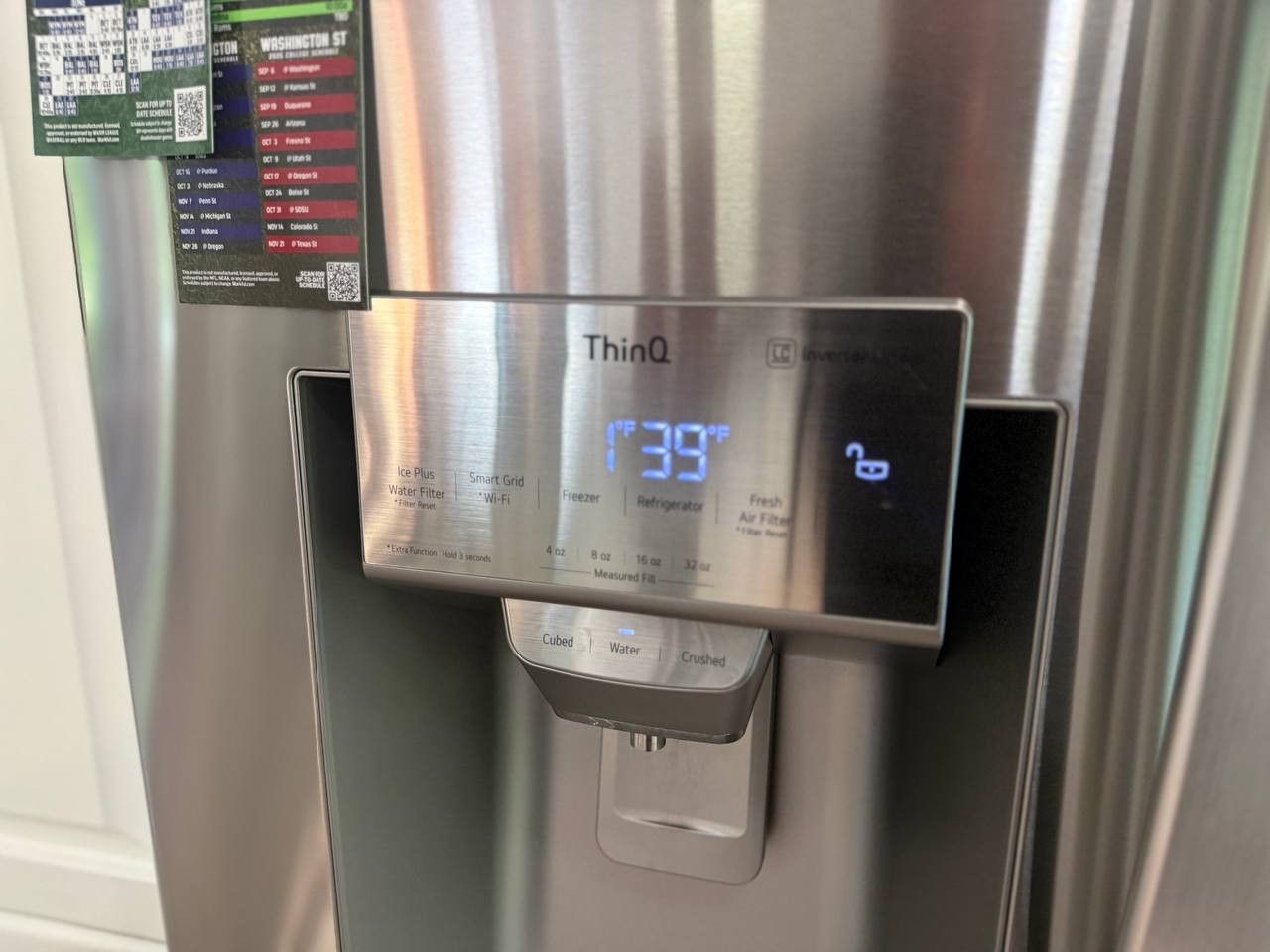
Very few kitchens built in Mountlake Terrace's first two decades were planned around a refrigerator that needs water. Ice makers came later, and so did the lines that feed them: often a quarter-inch tube tapped into the cold line under the sink, run through the cabinet and along the floor to the back of the fridge. Those lines are the weak point. Older saddle valves clog or seep, thin plastic tubing turns brittle and kinks when the refrigerator is pushed back, and a slow trickle at the valve gives you thin, hollow cubes, or nothing at all.
In Town Center apartments and the newer infill houses, water usually arrives through a recessed valve box in the wall behind the refrigerator, which is a far better arrangement. Problems there are almost always inside the refrigerator: an inlet valve, the ice-maker module, a fill tube that has iced over, or a door-mounted ice compartment that is not staying cold enough. Many of these models also carry a small heater on the fill tube that keeps the inlet from icing, and when it fails the symptoms look a lot like a bad valve. The diagnosis on a newer unit starts with the fridge's own test mode; on an older one it starts under the sink.
What you seeCubes thin, hollow or half-sized
Likely causeLow flow from a clogged saddle valve, a kinked tube or a tired filter
What we doMeasure the fill, trace the line, replace the filter or inlet valve as needed
What you seeNo ice, and the water dispenser is slow too
Likely causeSupply line pinched behind the fridge or a shutoff only partly open
What we doStraighten or replace the line, open the shutoff fully and clean the inlet screen
What you seeArm down, freezer cold, nothing happens
Likely causeIce-maker module motor or its control has failed
What we doRun a test cycle and replace the module if it does not respond
What you seeAn icicle hanging from the fill tube
Likely causeInlet valve dripping after it closes, or warm air reaching the tube
What we doReplace the leaking valve and check the fill tube heater or seal
What you seeDispenser chute drips or freezes shut
Likely causeWorn door flap seal or a failed chute heater
What we doReplace the flap seal or heater and check the dispenser switch
What you seeIce spilling over the bin onto the freezer floor
Likely causeShutoff arm or optical sensor not detecting a full bin
What we doTest the sensing, realign or replace the arm, check the module
With so much of the city's housing dating from its first two decades, the water line usually tells us more than the ice maker does. We look at how it is tapped, what it is made of and where it runs. Self-piercing saddle valves are a common source of slow fills and slow leaks; plastic tubing that has been crushed under a refrigerator foot or bent sharply behind it restricts flow. Replacing the line from the shutoff to the refrigerator is part of our ice-maker work, and if the household shutoff valve itself is failing, we point that out plainly.
The roughly 600 apartments coming online near I-5 through 2026, and the Town Center buildings opened since 2013, bring plenty of newer refrigerators, many with ice makers in the freezer drawer or in the left-hand door. If one quits while still young, look at the maker's warranty before booking; once the coverage has ended, they are routine work for us. A door-mounted ice bin stays frozen only while its little fan keeps blowing and its seal stays tight; when either gives out, the bin frosts up and the auger jams.
The city's supply is Everett water, drawn from Spada Reservoir and resold by the Alderwood district at about 12.5 parts per million of hardness. That is very soft water, so mineral scale rarely clogs ice-maker valves here the way it does in hard-water towns. Filters still matter, though, for sediment and taste. After any filter change, run a few glasses of water through the dispenser and discard the first batch of ice, since new filters can release carbon fines and trapped air. If the dispenser sputters for a minute after a change, that is the air working out of the line, not a fault.
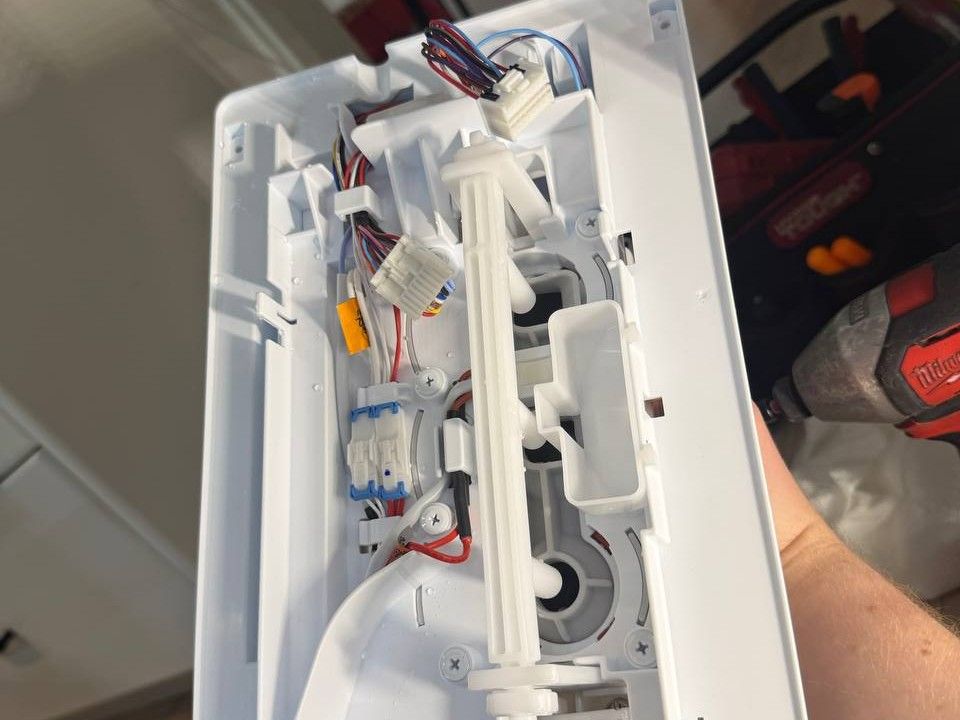
Ice maker repair in Mountlake Terrace starts from $289 for a new supply line, a fill valve or a replacement module. Think of it as the threshold of the category, not a price for your refrigerator. After the $95 diagnostic, your technician lists the exact price in a written estimate, and approving it puts the diagnostic toward the repair. Countertop ice machines and commercial ice equipment are not part of our work.
| Frozen fill tube thawed and protected | from $289 |
|---|---|
| Ice maker inlet valve | from $289 |
| Ice maker assembly | from $295 |
| Diagnostic visit | $95, counted toward the repair |
| Another appliance on the same call | $10 off its diagnostic |
2026 starting prices for Lynnwood and nearby towns. The $95 diagnostic counts toward any repair you approve, and your technician writes the exact figure down before work begins.
On a refrigerator that cools well and seals properly, an ice maker repair is usually worth it: a line, a valve or a module is a modest spend next to a new fridge. In older Mountlake Terrace kitchens, the cheapest fix is often the supply line itself, and a fresh line with a proper shutoff can turn a sputtering ice maker into a reliable one without touching the refrigerator. The picture changes when the refrigerator has its own problems, such as a defrost fault, a noisy compressor or rusted hinges, because money spent on ice goes into a machine with other repairs waiting. Should the compressor be the culprit, we do not do that sealed-system work, and the ice maker question becomes moot. For newer French-door models, replacing a module or a door compartment seal is normally the sensible path. We give you the numbers and our opinion so you can choose.
A saddle valve clamps onto a copper water pipe and pierces it to feed the ice maker. It was a common shortcut when ice makers were added to older kitchens. Over time saddle valves can clog, seep or stop shutting off fully. If yours is slow or damp, we will point it out during the visit and explain what a proper shutoff would look like for that line.
Follow the refrigerator maker's schedule, which is usually given in months or gallons. Soft water does not mean the filter lasts longer; sediment and taste still load it up. A slow dispenser, small cubes or a stale taste are signs it is overdue. Write the change date on the filter or in your phone so you are not guessing next time.
Some models allow it with a bypass plug that came in the box; others refuse to dispense or fill at all unless one or the other is fitted. Check your manual. Running without filtration is not dangerous on city water, but sediment can reach the inlet valve and the ice. If you have lost the bypass plug, share the model number and we will say what fits.
Ice absorbs odors from the freezer, and cubes that sit in the bin for weeks pick up whatever is around them. Empty the bin, wipe it out, and check for open food packages. An old water filter can also add a flat taste. If fresh ice from a new filter still tastes off, the supply line may be old plastic tubing worth replacing.
Our work covers the ice maker inside a refrigerator or freezer. Countertop ice machines count as small countertop appliances, which we do not work on, and commercial ice equipment is outside our work as well. If you are not sure which kind you have, give us the model number by phone or add it to the online booking request, and we will tell you before anyone visits.
Something not working?
Call (425) 287-5458 or book online and say whether the ice maker lives in the freezer, a drawer or the door. Say yes to the work and the $95 diagnostic is credited against it, while seniors 65+, veterans and households with someone in active military service save up to $18.
Ice makers
Small, thin or hollow ice cubes usually trace back to the water supply: saddle valves in older houses, wall valve boxes in new townhomes, filters and sensors.
Book a repair
Three quick steps. We call back to confirm a time; requests that come in during the morning can usually be seen the same day.
Rather call? (425) 287-5458 · Mon–Sat 8–7