Ice makers
Small or hollow ice cubes: following the water back to the wall
Small, thin or hollow ice cubes usually trace back to the water supply: saddle valves in older houses, wall valve boxes in new townhomes, filters and sensors.
Ice makers · Lynnwood
Mineral scale is rarely why an ice maker quits in Lynnwood, because the water here is very soft. The usual suspects are the fill valve, the freezer temperature, the water filter and the module itself, and your technician checks all four.
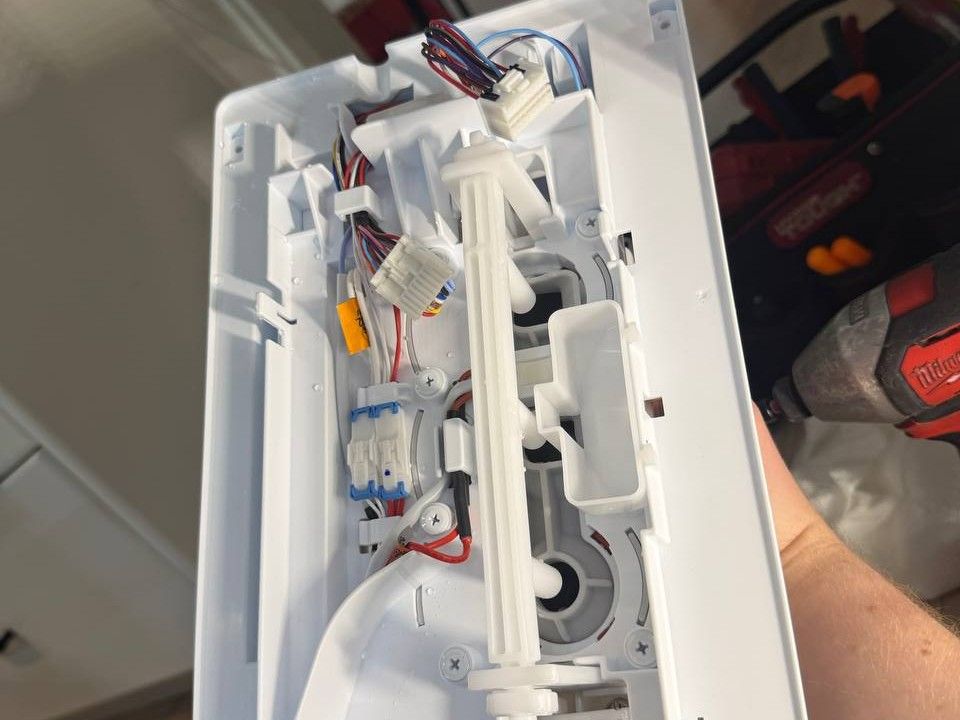
An ice maker is a small machine living inside a larger one, and it depends on everything around it: a freezer cold enough to freeze each fill, a valve that opens for a few seconds and then shuts tight, a supply line with steady pressure, and a filter that still lets water through. In Lynnwood one classic cause can usually be ruled out early. The city's water, bought from Everett through the Alderwood district, averages about 12.5 ppm, so the crusted valves and chalky molds familiar in hard-water regions are rare here.
What we do find falls into three groups. French-door and side-by-side refrigerators in North Lynnwood and Martha Lake homes built after 2000, now running original ice makers well past their prime. Garage freezers in Alderwood Manor and Meadowdale with an ice maker that works in some seasons and not in others. And apartment refrigerators around City Center whose supply tubing got pinched when the unit was pushed back into its bay after cleaning. Each group points the diagnosis in a different direction: toward worn parts in the first, toward the setting in the second, and toward the installation in the third. Knowing which group you belong to before the visit lets your technician load the likely parts.
What you seeNo ice, though the freezer feels cold
Likely causeFill valve not opening, an iced-up fill tube or a failed module
What we doTest the valve coil and the module, thaw and check the fill tube, replace what failed
What you seeSmall, hollow or crescent-thin cubes
Likely causeClogged water filter or low supply pressure
What we doCheck flow at the valve, swap the filter and inspect the line for kinks
What you seeIce fused into one block in the bin
Likely causeFreezer temperature swinging, or the bin left unused for weeks
What we doCheck the defrost cycle and door seals, then clear the bin and chute
What you seeWater dripping into the bin or onto the freezer floor
Likely causeValve not closing fully, or a refrigerator that is not level
What we doReplace a seeping valve, re-level the fridge and inspect the fill cup
What you seeDispenser grinds but nothing comes out
Likely causeIce jammed at the auger, or a failed auger motor
What we doClear the jam, test the motor and the dispenser door flap
What you seeFrost building in a door ice compartment
Likely causeWorn compartment seal or a fault in the ice-room fan
What we doReplace the seal or fan and clear the frost from the air duct
Close to half of Martha Lake's homes and more than half of North Lynnwood's were built after 2000. That puts a lot of original French-door and side-by-side refrigerators, with door-mounted ice makers and through-the-door dispensers, deep into their second decade. The door ice compartment is the weak point on many of them: it sits in the warmer fresh-food door and depends on a small fan and a gasket to stay frozen. When either one tires, frost builds, the auger jams and cubes weld together. Replacing the gasket or fan before the ice maker itself often fixes the whole chain.
Upright freezers and second refrigerators in Lynnwood garages often get their water through a long run of tubing from the nearest cold line. In a cold snap that tubing can freeze where it crosses an exterior wall or an unheated corner, and on a hot summer afternoon the freezer may struggle to freeze each batch fast enough. Location is part of the diagnosis, because a new valve will not help a line that freezes every January. Sometimes the fix is a better route for the tubing rather than a new part. A freezer standing directly against a sunny garage wall or beside a water heater also runs warmer than its dial suggests.
After the November 2024 windstorm cut power to more than 70,000 PUD customers, bins that thawed and refroze could fuse into a single block around the auger. Throw out the first batches after any long outage, and if the bin froze solid, empty it before running the dispenser again. On filters: soft water can still carry sediment, and a filter left in well past its change date accounts for a large share of the slow fills and thin cubes we see in Lynnwood. If your refrigerator came with a filter bypass plug, keep it somewhere safe; some models will not send water anywhere without either a filter or that plug in place.
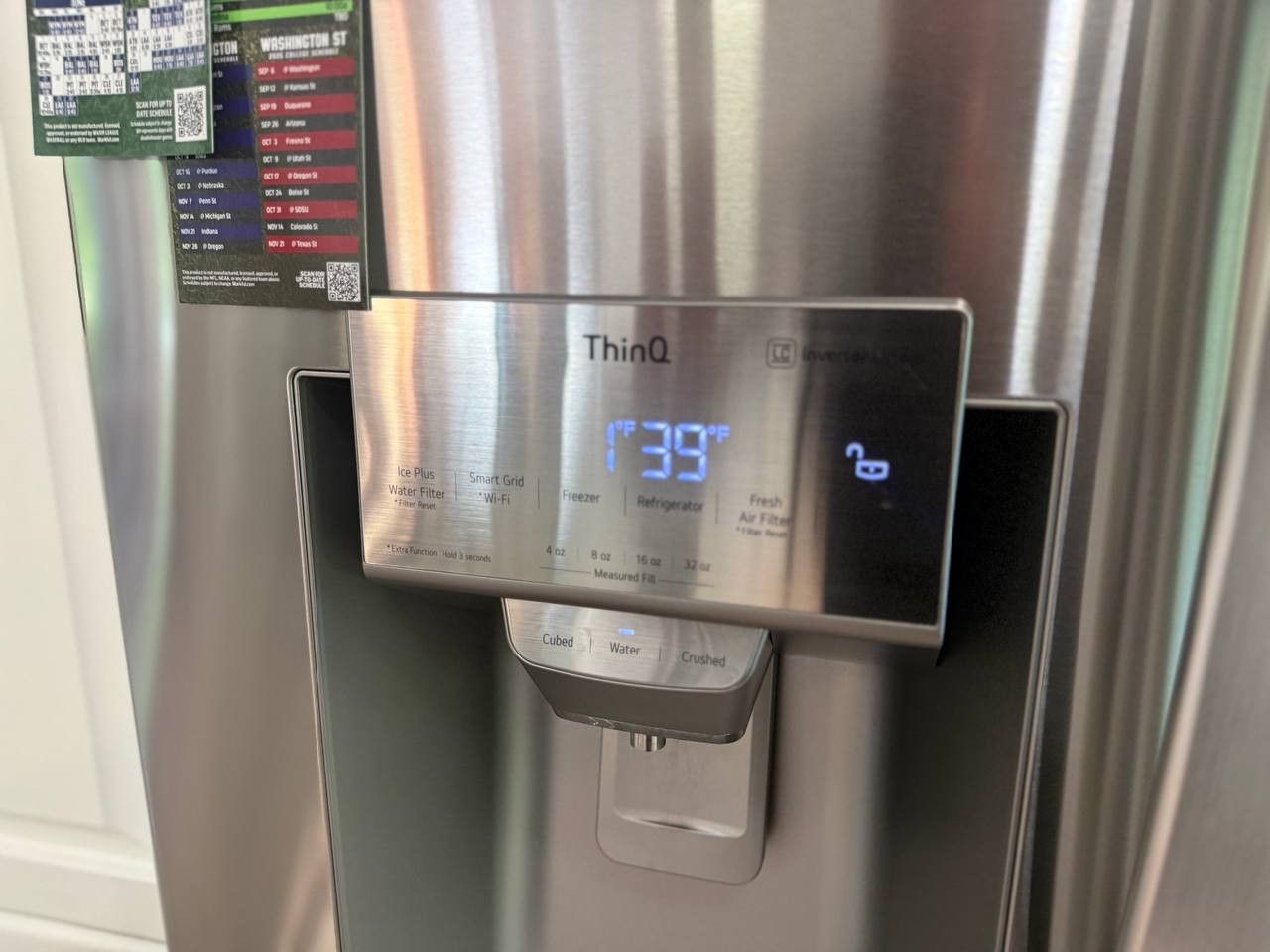
Ice maker repair starts at $289, for work such as a water line, an inlet valve or a new ice-maker module. That number opens the category and stops short of being a quote. Your technician puts the actual price on paper after the $95 diagnostic and starts only with your go-ahead. Our ice-maker work stays inside home refrigerators and freezers, so countertop units and commercial ice machines are not on our list.
| Frozen fill tube thawed and protected | from $289 |
|---|---|
| Ice maker inlet valve | from $289 |
| Ice maker assembly | from $295 |
| Diagnostic visit | $95, counted toward the repair |
| Another appliance on the same call | $10 off its diagnostic |
2026 starting prices for Lynnwood and nearby towns. The $95 diagnostic counts toward any repair you approve, and your technician writes the exact figure down before work begins.
Ice maker parts are modest compared with the refrigerator around them, so on a fridge that still cools well, repairing the ice maker is usually worth it. A module, a valve or a line can be replaced in a single visit on most models, and many modules are made to swap in as a unit. The decision gets harder when the refrigerator itself has other problems: a defrost fault, a failing compressor or rusted door hinges. In that case, fixing only the ice maker puts money into a machine with other bills coming. Some Lynnwood owners with older garage freezers simply switch the ice maker off and use trays, which is a perfectly reasonable choice. For a French-door model from the 2000s, repairing the door compartment and module is normally the sensible path. Either way, you see the price before anything is ordered.
Rarely. Lynnwood's tap water carries less than one grain of hardness per gallon, so mineral buildup in the valve and mold is uncommon. Changing the refrigerator's water filter on the maker's schedule matters far more. If you do see white crust in the ice mold, mention it when you book; it usually points to a different water source or an old, failing filter.
After a new module or valve, the first harvest usually comes within a few hours, once the mold is cold enough to start a cycle. A full bin can take about a day. Discard the first batch or two, especially if the water line or filter was also changed, since those cubes can carry air bubbles, carbon fines from the new filter or a stale taste.
Yes. Most ice makers have a switch or a wire arm you can raise to stop production. Leaving it on with the water supply shut off is a bad idea, because the valve may buzz and the module keeps trying to fill. If you are away for weeks, turn it off and empty the bin so the cubes do not fuse together while you are gone.
A garage gets far colder in winter and far warmer in summer than a kitchen. In cold weather the supply tubing can freeze where it passes through an unheated space, and in hot weather the freezer may not get cold enough to freeze each fill quickly. Your technician checks the line route and the freezer temperature along with the ice maker itself before replacing anything.
It depends on the rest of the fridge. If it cools well, the doors seal and the cabinet is not rusting, an ice maker repair is a reasonable spend. If the fridge also has a defrost or cooling problem, we tell you, so you can decide whether to put money into it at all. If the compressor has failed, that is sealed-system work outside our scope, which tends to settle the question.
Something not working?
Call (425) 287-5458 or book online, and let us know whether the ice maker sits in the freezer or in the door. Once you approve the work, the $95 diagnostic goes toward it; veterans, active-duty military households and seniors 65+ get up to $18 off the repair.
Ice makers
Small, thin or hollow ice cubes usually trace back to the water supply: saddle valves in older houses, wall valve boxes in new townhomes, filters and sensors.
Book a repair
Three quick steps. We call back to confirm a time; requests that come in during the morning can usually be seen the same day.
Rather call? (425) 287-5458 · Mon–Sat 8–7