Refrigerators
Frost building up in the freezer: read the pattern, then check the seal
Frost on the packages by the door, ice in one corner, a garage freezer that frosts over in weeks: how to read the pattern and test the gasket before you call.
Fridges & freezers · Mill Creek
Plenty of Mill Creek households run two cold boxes, one in the kitchen and a spare fridge or freezer in the garage. We repair both, from fans and defrost parts to boards, and say plainly when a cooling fault is outside our work.
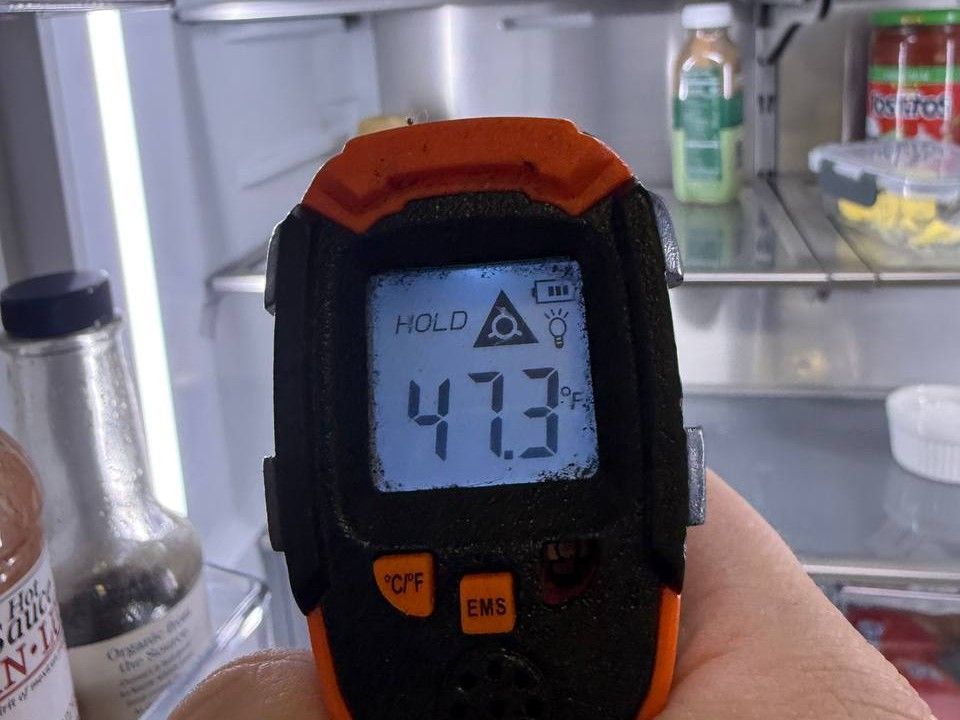
Attached garages are the norm for the detached houses built here since 1980, and a good number of them now hold a spare refrigerator or a chest freezer beside the bikes and the recycling. Those units lead a harder life than the one in the kitchen. They bake in summer with dust drifting into the condenser, and in winter the garage can drop cold enough that the refrigerator decides it has nothing to do, so its freezer section slowly softens. In Mill Creek East, where most homes date from after 2000, and in Silver Firs, where nine houses in ten stand on their own lot, garage units account for a real share of the refrigerator calls we take.
Indoors, the typical Mill Creek refrigerator is a French-door or side-by-side model with an ice maker and an electronic control, often the second one the kitchen has owned. The original plat houses near the fairways went through their first refrigerators long ago; the newer subdivisions are on their first or second. The parts that fail are largely the same either way: fans, defrost components, start relays and boards, all of which we repair in your kitchen. Sealed-system work, meaning the compressor itself or the refrigerant inside the tubing, is something we don't take on, and we tell you that on the first visit rather than after a second trip.
What you seeGarage freezer turns soft in a cold snap while the fridge side seems fine
Likely causeA cold garage keeps the single thermostat from calling for cooling
What we doCheck the model's garage rating, test the controls and tell you whether it can cope
What you seeFresh-food side warming while the freezer stays cold
Likely causeEvaporator fan stopped, or the coil iced over after a defrost fault
What we doTest the fan, defrost heater and sensor, then replace the part that failed
What you seeClicking from the back and cooling that stops every few minutes
Likely causeStart relay or overload giving out on the compressor
What we doSwap in a new relay and overload, or tell you straight away when the compressor has died
What you seeBuzz or rattle low at the back of a garage unit
Likely causeCondenser fan dragging, coil packed with dust and lint
What we doClean the coil and replace the fan motor if its bearings are worn
What you seePuddle beneath the crisper drawers or on the floor
Likely causeMeltwater drain plugged with ice or debris
What we doThaw and flush the drain line, then force a defrost cycle to prove it
What you seeDisplay blank or scrambled after the power came back
Likely causeControl board or its fuse hurt by a surge
What we doTest the outlet and breaker first, then the board, and replace what is damaged
Heat is the first stress. During the June 2021 heat dome, the Everett Herald listed an unofficial 107°F for Mill Creek on the afternoon of June 28, and closed garages ran hotter still. A refrigerator sheds its heat through the condenser coil underneath, and in a garage that coil is usually furred with dust, dryer lint and leaf litter. Pair that with a condenser fan that has been spinning since the house was new, and the compressor runs nonstop while the temperature still climbs. More often than not the cure is a clean coil and a new fan motor, both handled on the first visit.
Cold is the quieter problem. Many standard refrigerators are designed for a heated room, with one thermostat in the fresh-food section steering the whole system. When the garage sinks toward freezing in January, that section stays cold on its own, the compressor barely runs, and the freezer drifts up into the twenties. Nothing is broken in the usual sense. We confirm whether your model is rated for garage use, test the sensors so a real fault isn't missed, and lay out the choices: a garage-rated refrigerator, a dedicated chest freezer, or moving the unit indoors.
Power is the third. Snohomish County PUD serves the whole city, and in the bomb-cyclone windstorm of November 2024 it logged more than 70,000 customers without service at one point. When the lights flicker back, an electronic board takes the jolt. If yours returned blank or confused, we check the outlet and breaker before anything else; a fault in the house wiring goes to an electrician, while a damaged board or fuse inside the refrigerator is ours. In the Town Center and East Gateway apartments, counter-depth models wedged into tight alcoves bring one more issue, because they need clearance at the top and back to breathe.
Refrigerator repair in Mill Creek starts at $259 for the category, and the table beside this shows where each common job begins. Read those numbers as starting points, not a quote for your appliance: the exact price is written on the estimate your technician hands you after the $95 diagnostic, and nothing begins until you sign off. Go ahead with the repair and that diagnostic fee becomes part of it. Decline, and the $95 visit is the only charge, with the findings written down for you to keep.
| Start relay and overload on the compressor | from $259 |
|---|---|
| Inlet valve for the dispenser and ice | from $265 |
| Condenser fan motor | from $269 |
| Evaporator fan behind the freezer wall | from $269 |
| Defrost heater, sensor or timer | from $275 |
| Main control board | from $285 |
| Diagnostic visit | $95, counted toward the repair |
| Another appliance on the same call | $10 off its diagnostic |
2026 starting prices for Lynnwood and nearby towns. The $95 diagnostic counts toward any repair you approve, and your technician writes the exact figure down before work begins.
For a kitchen refrigerator, the failed part and the unit's age settle most cases. A fan, relay, defrost heater or inlet valve on a model in the middle of its working life is almost always worth fixing, and a board can be too while the maker still supplies it. When the diagnostic points to the sealed system, we stop there and say so, since compressor and refrigerant work sits outside what we do and usually costs close to a new appliance anyway. Garage units call for a different question. If a standard refrigerator keeps failing in a garage that swings from August heat to January frost, a repair buys time but not a cure, and a garage-rated model or a chest freezer may serve you better. In the remodeled kitchens near the fairways, built-in and panel-ready units are costly to replace and sized to the cabinetry, which tilts the decision toward repair.
Some can, many struggle. Check the manual or the label inside for a garage rating or an ambient temperature range. A unit built for heated rooms often lets its freezer warm up when the garage gets near freezing, and it runs hard on hot afternoons. We can test the controls and sensors to rule out a real fault, then tell you whether the model suits the space.
That is the one refrigerator job we don't do. Compressors and refrigerant lines sit beyond the parts we replace, and we say so as soon as testing points there. You get a plain explanation of what failed and help weighing a new refrigerator against other options. If you decline further work, the diagnostic visit is the only charge. Fans, relays, defrost parts, valves, thermostats and boards are all repairs we handle at your house.
Make sure the breaker hasn't tripped and the doors close fully against their gaskets. Check that a crowded shelf isn't covering the vents where cold air enters the fresh-food side, and confirm nobody bumped the temperature setting. On a garage unit, sweep away dust and boxes from the base grille. If it is still warm after a few hours, call us and keep the doors shut meanwhile.
We do. Built-in and panel-ready units from Sub-Zero, Thermador, KitchenAid, GE Monogram and similar brands are part of the work, and most of what fails on them is the same family of parts found in any refrigerator. The model and serial number are printed on a label inside the fresh-food section; read them to us on the phone or enter them in the booking form, so your technician can check parts before arriving.
We can often be there the day you call, Monday to Saturday, and the earlier you reach us, the better the odds. From central Lynnwood the drive is roughly 12 to 16 minutes off-peak, with Silver Firs and Mill Creek East a little farther. If the freezer is warming, move the most perishable food to a cooler while you wait.
Something not working?
Reach us at (425) 287-5458 or book the Mill Creek visit online in three short steps. Your $95 diagnostic goes toward the repair you approve, and households with a senior 65+, a veteran or an active-duty service member get up to $18 off that repair.
Refrigerators
Frost on the packages by the door, ice in one corner, a garage freezer that frosts over in weeks: how to read the pattern and test the gasket before you call.
Book a repair
Three quick steps. We call back to confirm a time; requests that come in during the morning can usually be seen the same day.
Rather call? (425) 287-5458 · Mon–Sat 8–7